Crowned Eagle
150–180cm
80–100cm
2,600–4,100g
Profile
- Life expectancy
- Clutch size
- 1–2 eggs
- Global status
- Activity
- Migration
Identification
An erectile crest and powerful talons characterise this forest eagle. Its short, broad wings and long tail allow tight turns between trees. Young Crowned Eagles are much paler than adults.
Colours
Adult
Dark head with an erectile crest, dark upperparts and boldly marked cream to reddish underparts. The long tail is clearly barred.
Behaviour
Crowned Eagles also occur in some South African cities, provided suitable woodland remains. A long-term study in KwaZulu-Natal shows how flexibly the species can respond to such altered landscapes.
Breeding & rearing
Many pairs breed only every second year. In more strongly urbanised territories, annual breeding attempts were observed more often, but also more failures. More frequent breeding therefore does not automatically mean more fledged young.
Diet
Prey examples
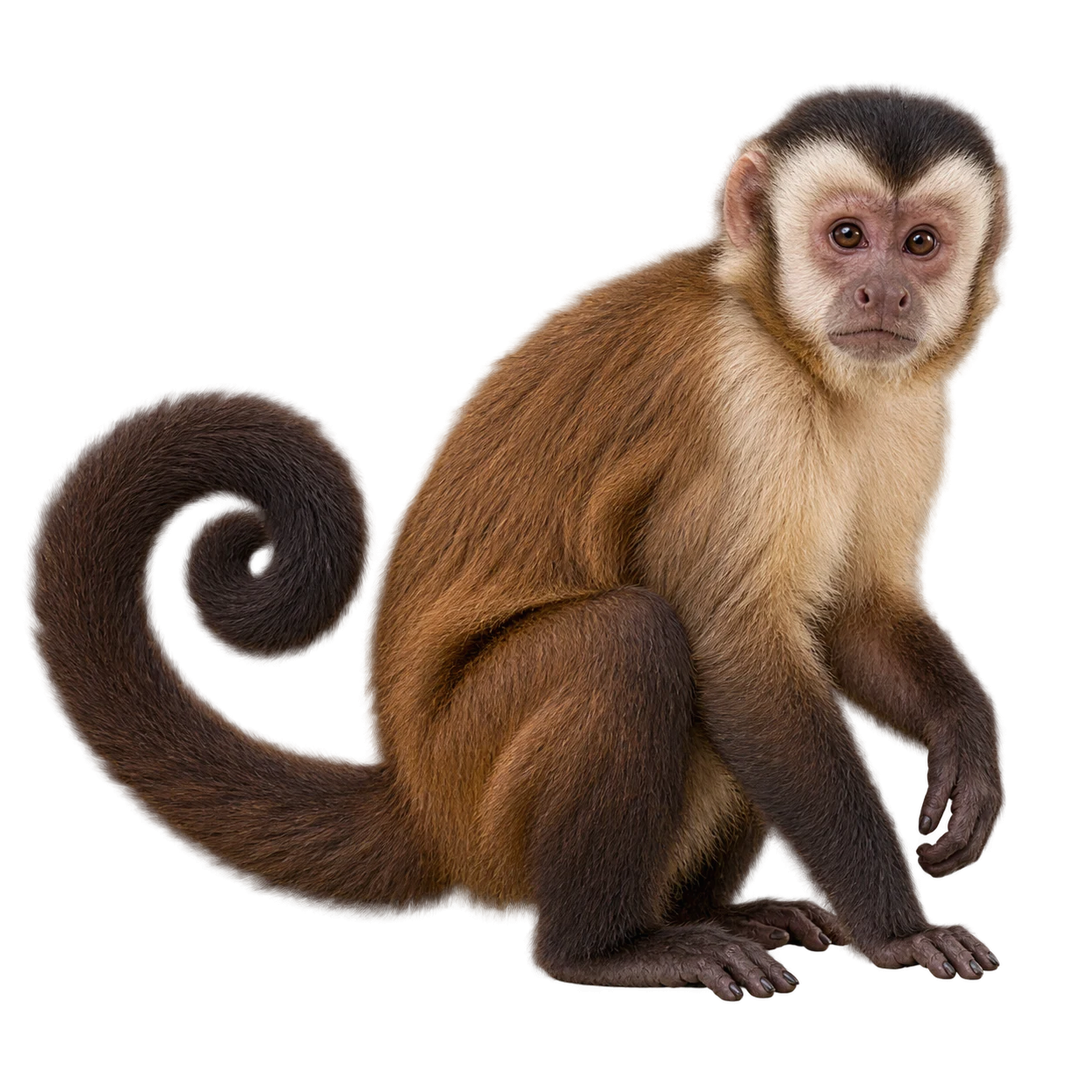
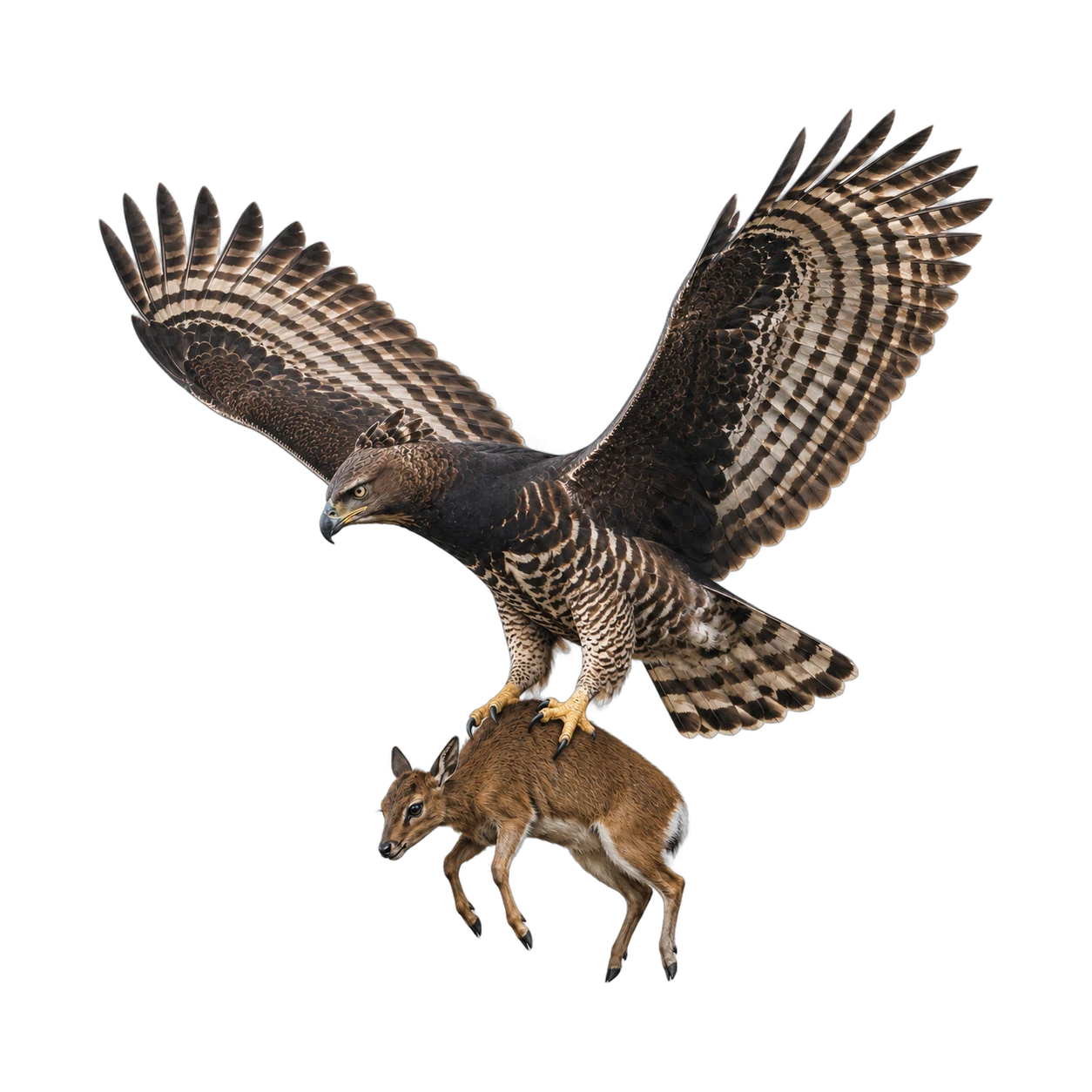
MonkeysForest mammals, especially monkeys and small antelopes, make up most of the diet. Which prey dominates depends on the area. Large prey is dismembered on the ground and carried to the eyrie in portions.
Occasional
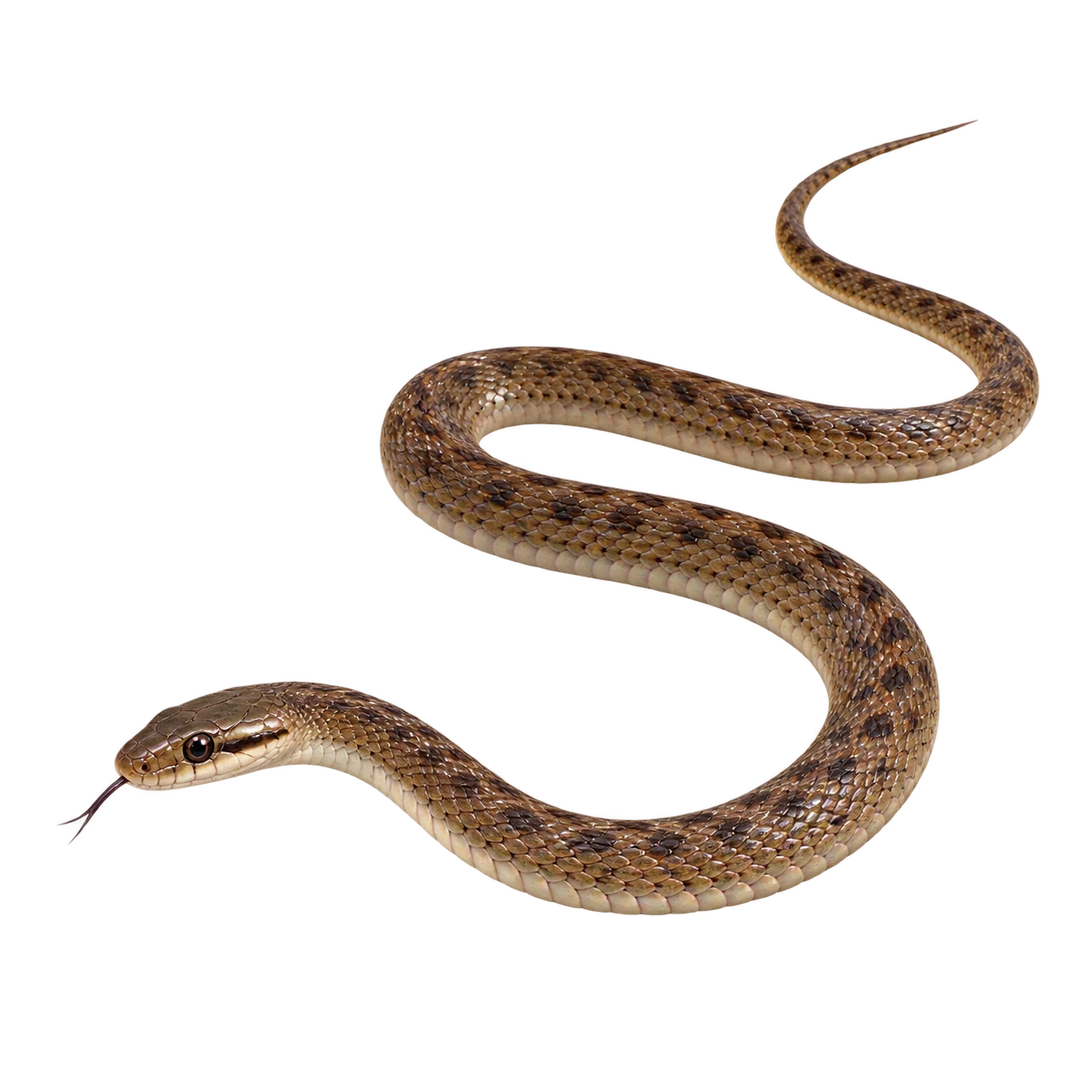
SnakesHunting

From a hidden perch the crowned eagle watches clearings and branches. With a short, powerful flight it seizes mammals on the ground or in the trees. Sometimes a pair hunts together.
Distribution
Range
Sub-Saharan Africa
Habitat
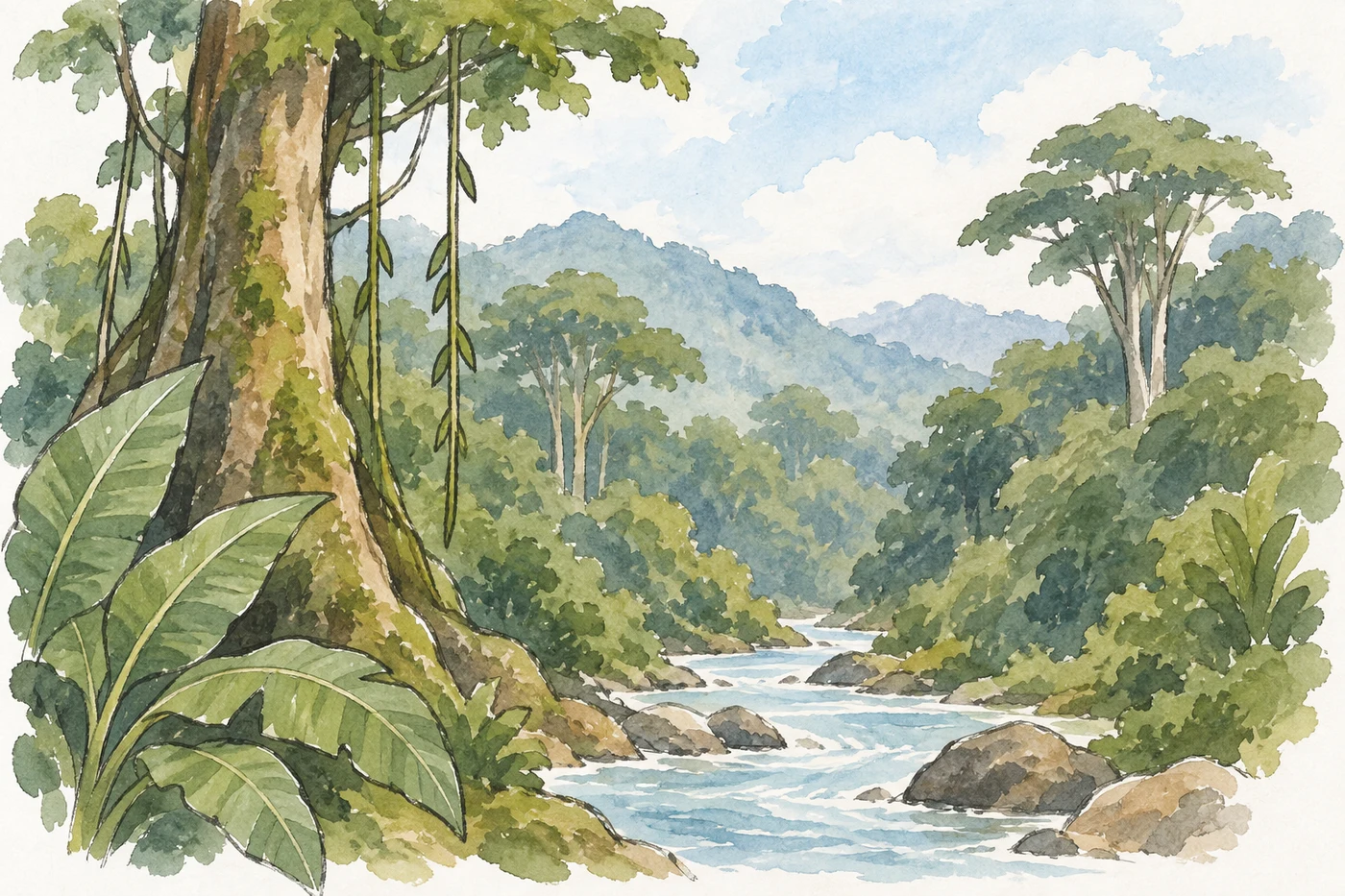
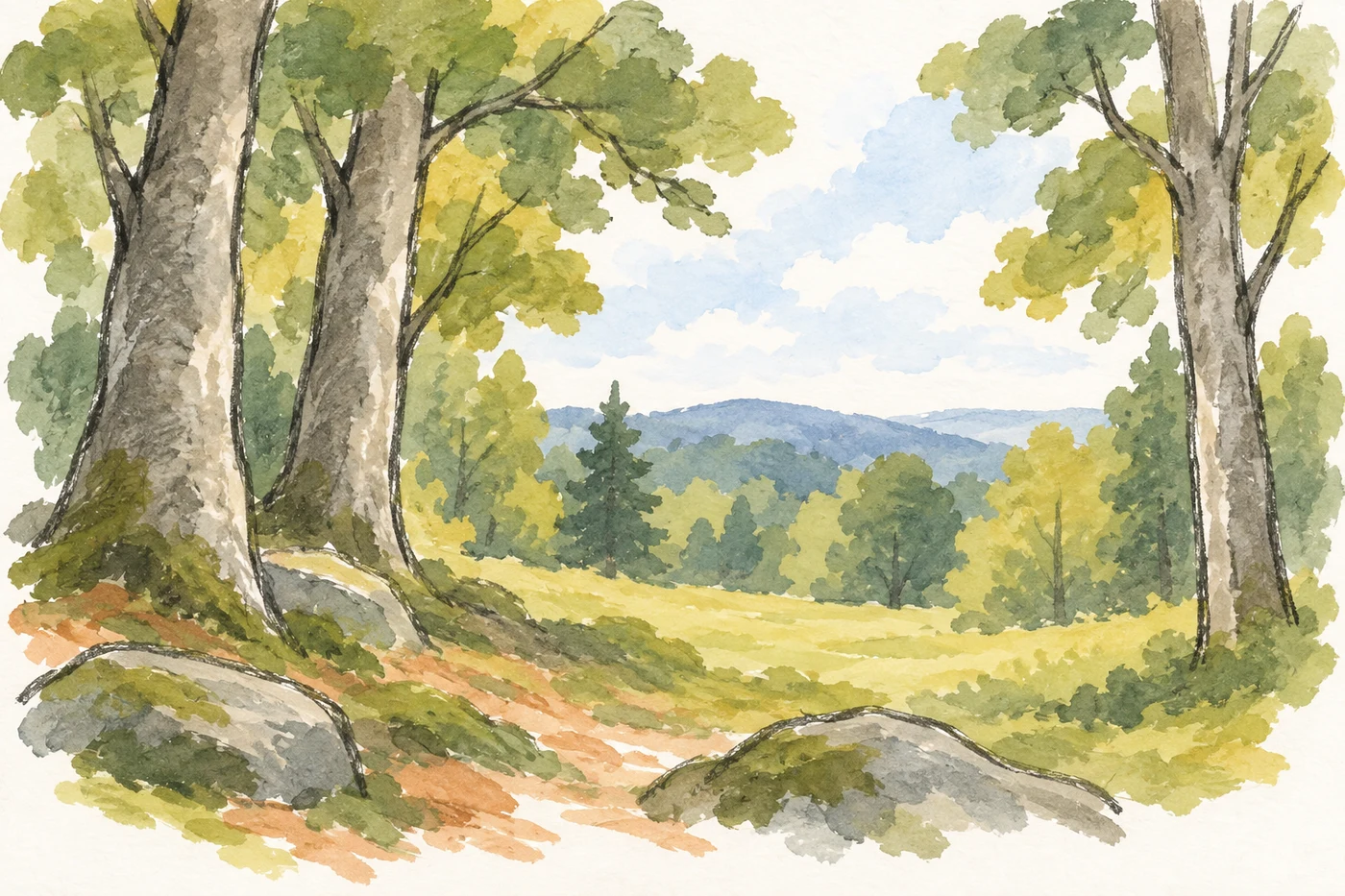
Tropical forests, wooded mountain landscapes and dense patches of forest with large nest trees. For hunting it also uses clearings and forest edges.