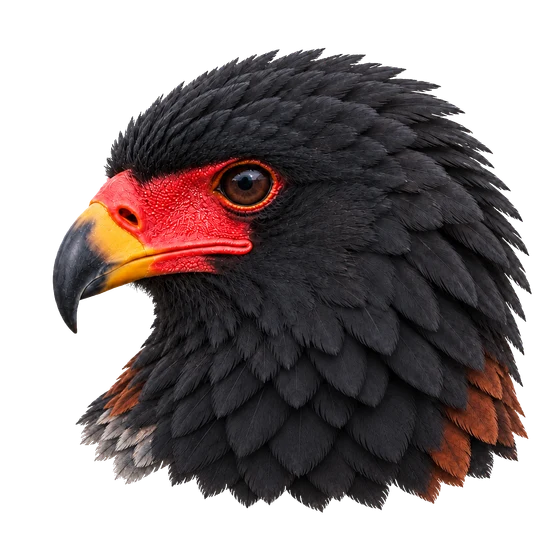
Bateleur
170–190cm
55–70cm
1,800–2,500g
Profile
- Life expectancy
- Clutch size
- 1 egg
- Global status
- Activity
- Migration
Identification
The extremely short tail and long, broad wings make the adult recognisable even as a silhouette. Red, unfeathered facial skin and legs contrast with the dark body. Juveniles are brown and have a longer tail.
Colours
Male · Chestnut
Black head and body, chestnut back and short chestnut tail. In the male the black trailing edge of the pale underwing is broad.
Besides the usual chestnut back there is a rare cream morph with a paler, pale chestnut tail. The black body remains. Both back colours can be selected for males and females; the sex features on the wing remain. The brown juvenile plumage is shown as a separate age class. The back colour choice applies to adults only.
Behaviour
In low search flight the Bateleur keeps tilting slightly from side to side. Depending on its excitement, its facial skin can appear a deeper red. It spends a lot of time over open country.
Breeding & rearing
The pair builds a stick nest in a tree fork. After several months in the nest the young bird fledges, but remains dependent on its parents for food for a long time.
Diet
Prey examples
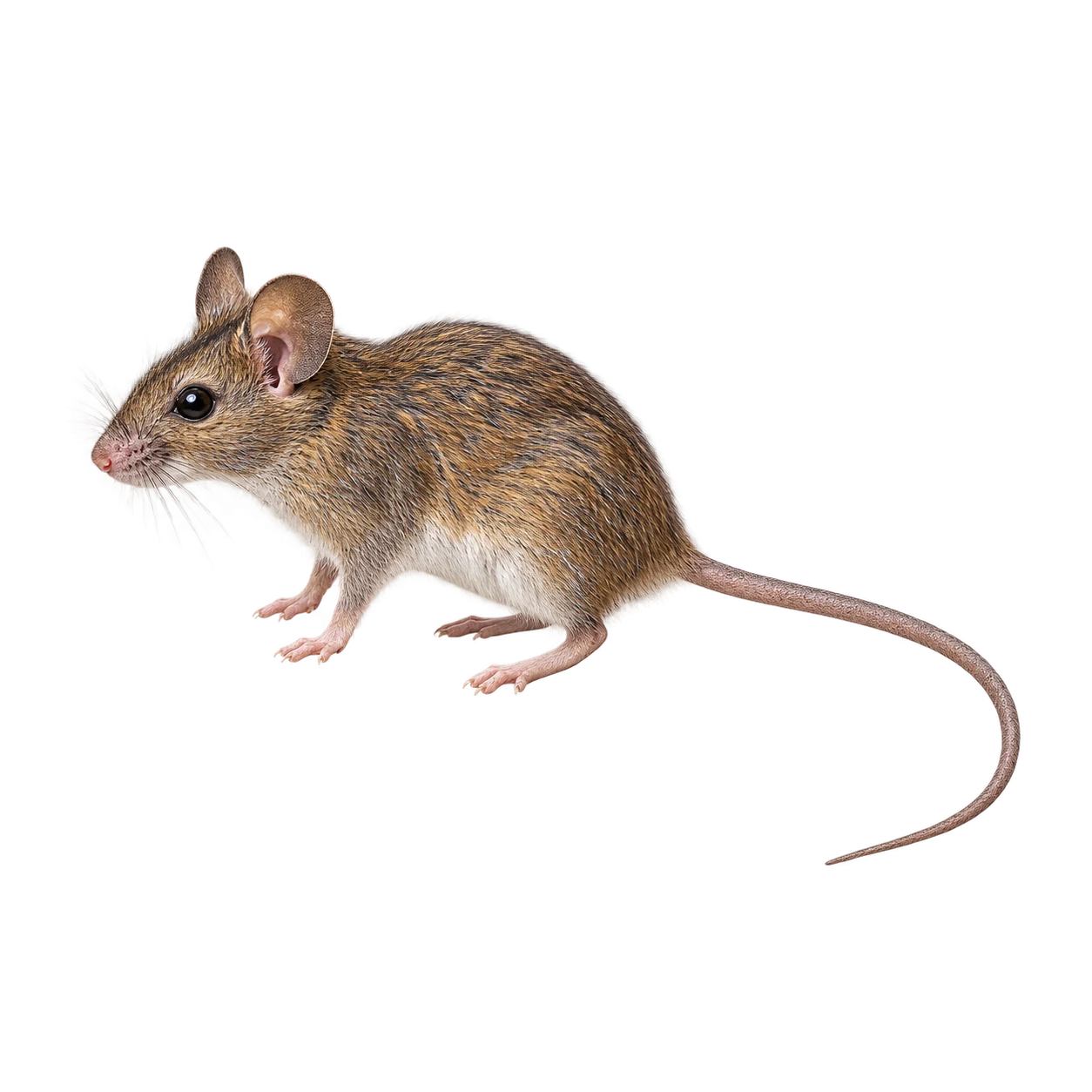
Mice
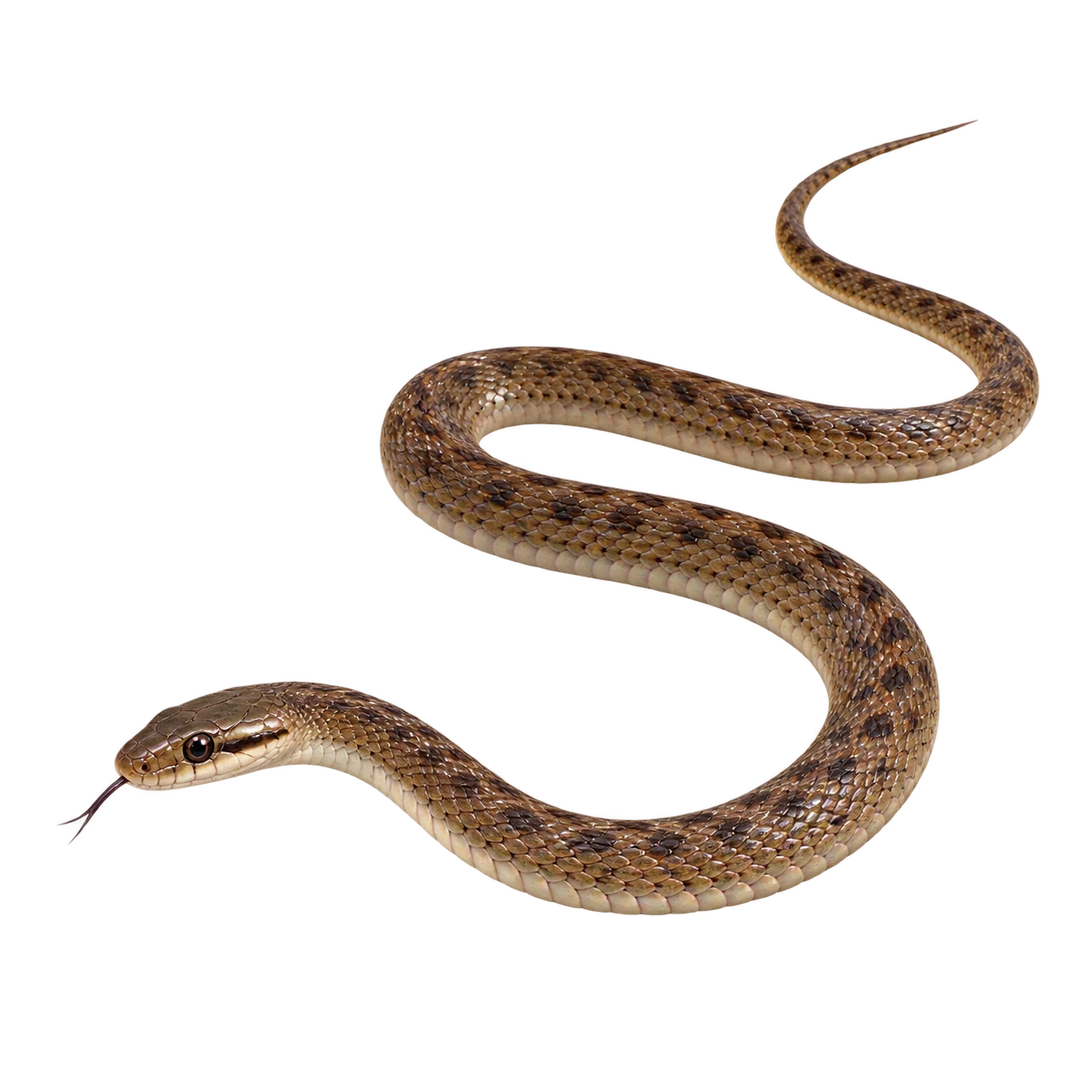
Snakes
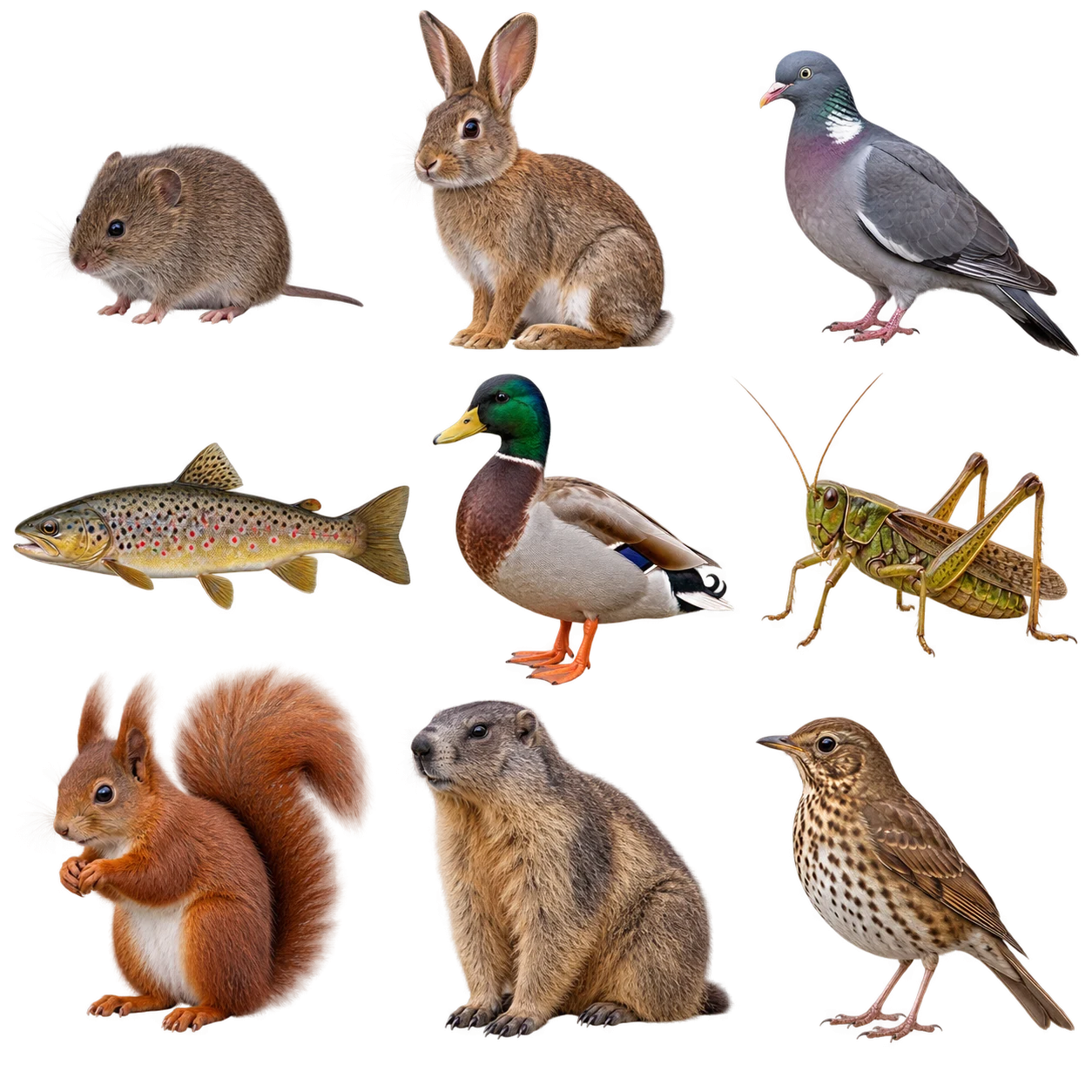
PigeonsThe Bateleur seeks both live vertebrates and carrion. Its prey includes small mammals, birds and especially snakes.
Hunting
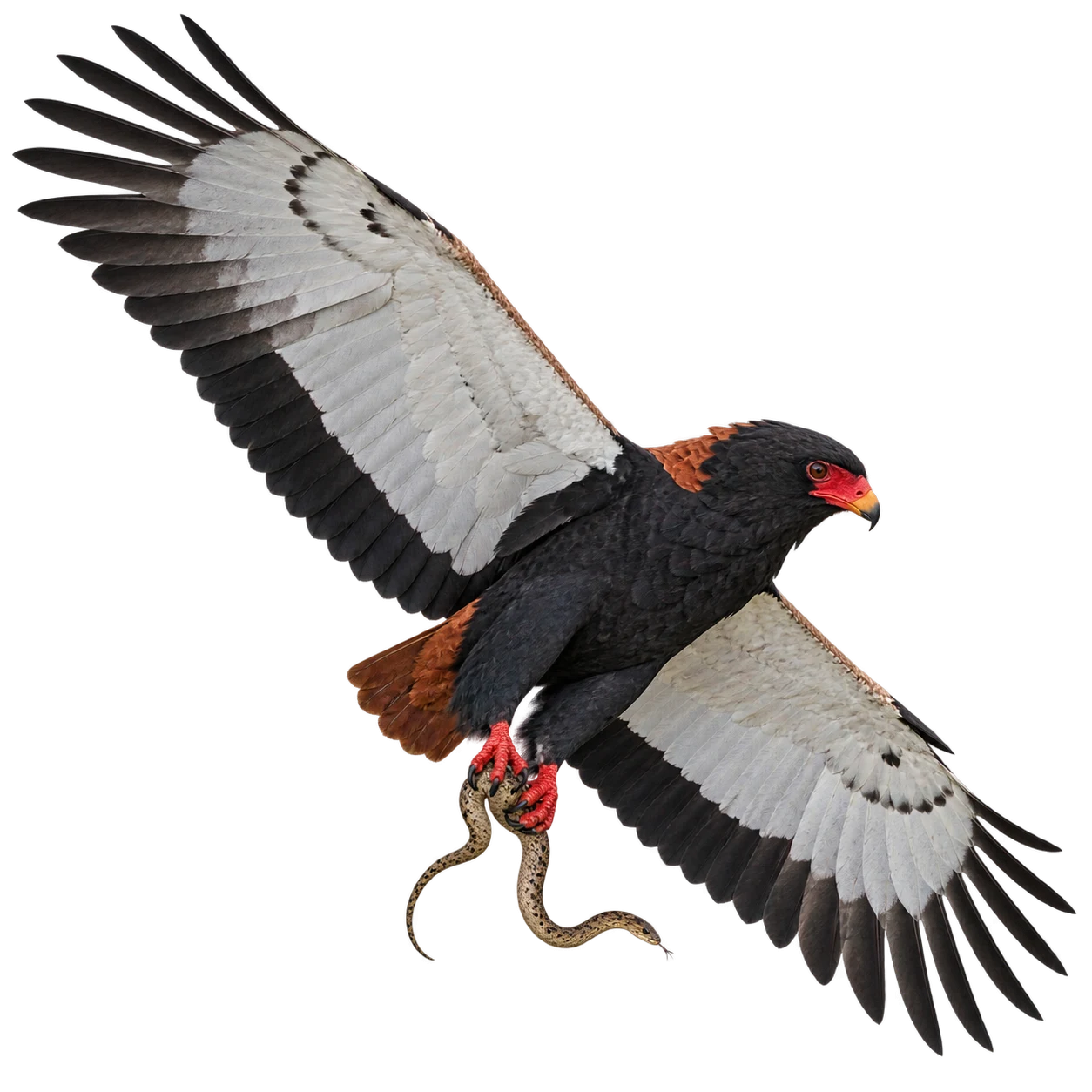
In low gliding flight it scans large areas for small vertebrates and carrion. When it spots suitable prey on the ground, it moves in for a targeted strike.
Distribution
Range
Sub-Saharan Africa
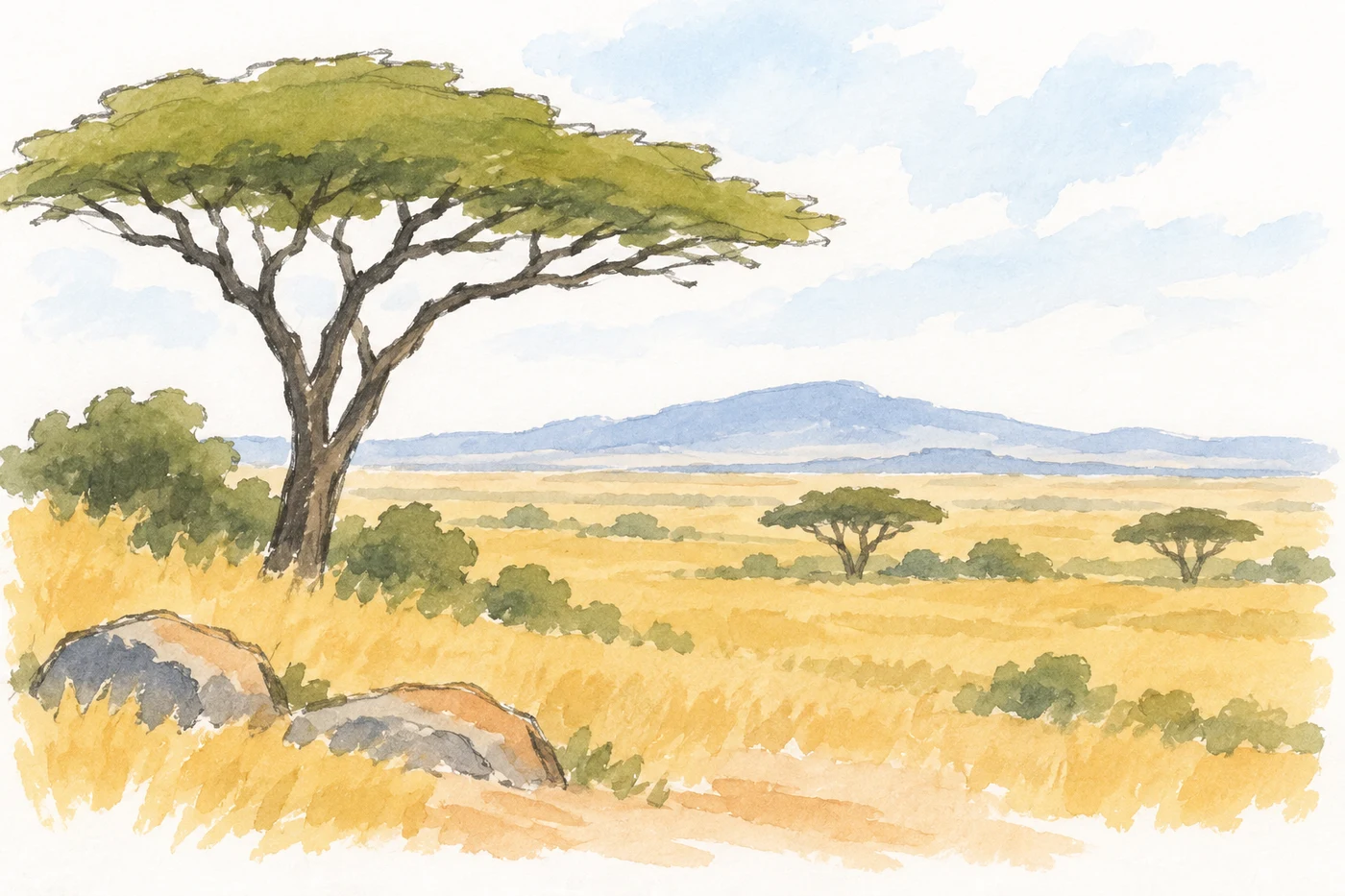
Habitat
Savannahs, open dry woodland and open country with scattered tall trees.