Eurasian Sparrowhawk
60–75cm
30–40cm
110–200g
Profile
- Life expectancy
- Clutch size
- 4–5 eggs
- Global status
- Activity
- Migration
- Falconry
Identification
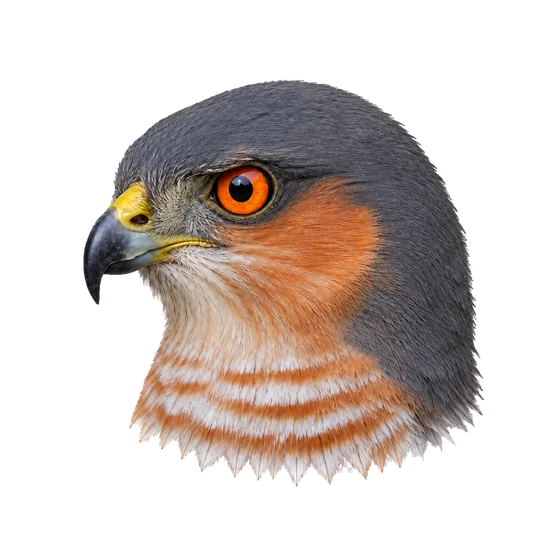
Short, rounded wings, a long tail and thin legs characterise this small bird hunter. The male is clearly smaller than the female. Its similarity to the goshawk calls for a look at size and proportions.
Colours
Behaviour
Alternating short bursts of wingbeats with glides, it moves through terrain rich in cover. During the breeding season it lives secretively; in winter it is seen more often in gardens. Its hunts can lead into dense undergrowth.
Breeding & rearing
The nest is preferably built high in conifers. Parks and other urban woodland can also serve as breeding territories. While raising the young, the pair needs enough small birds within reach.
Diet
Prey examples
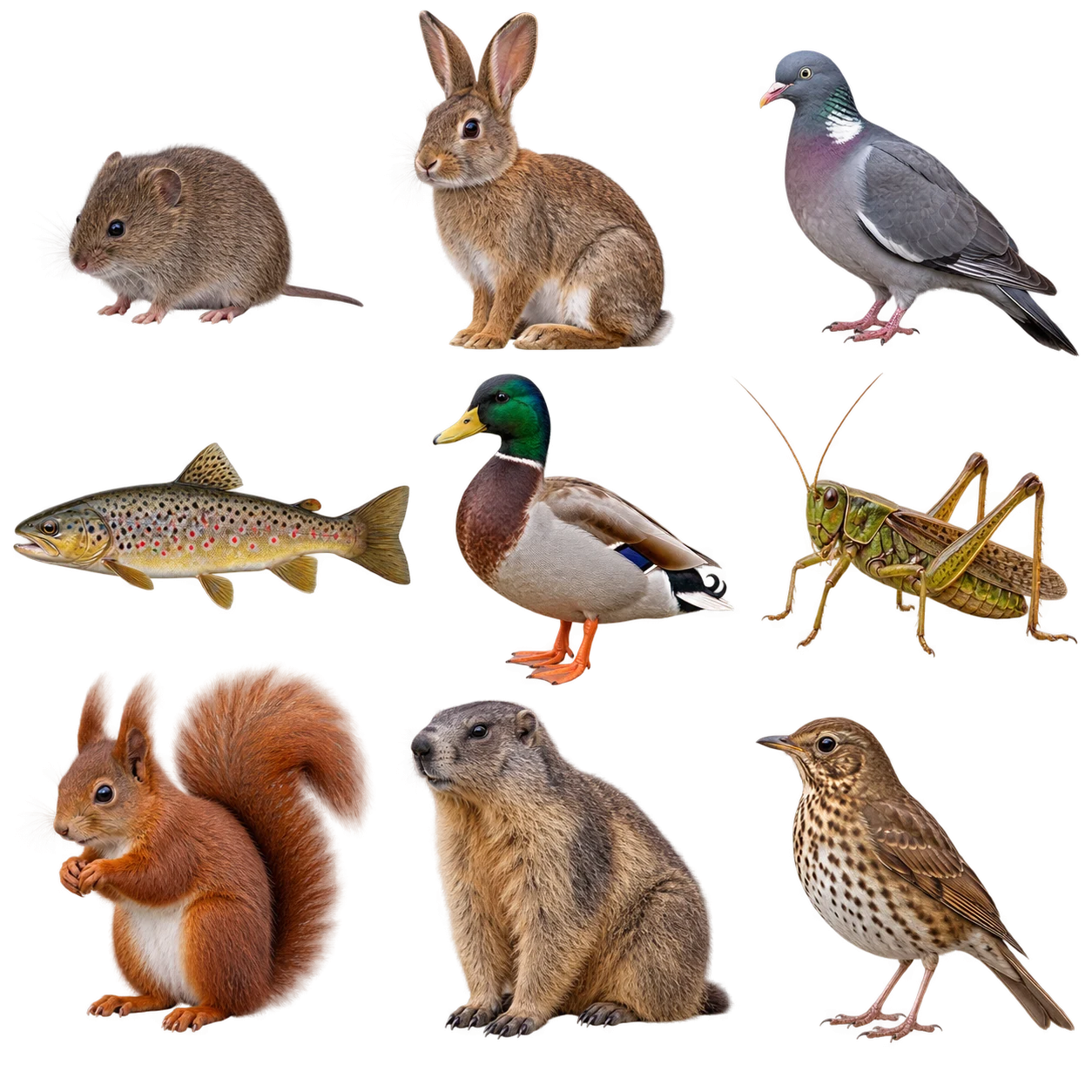
SongbirdsThe Eurasian Sparrowhawk specialises in small birds. Small rodents play a role only in exceptional cases.
Hunting
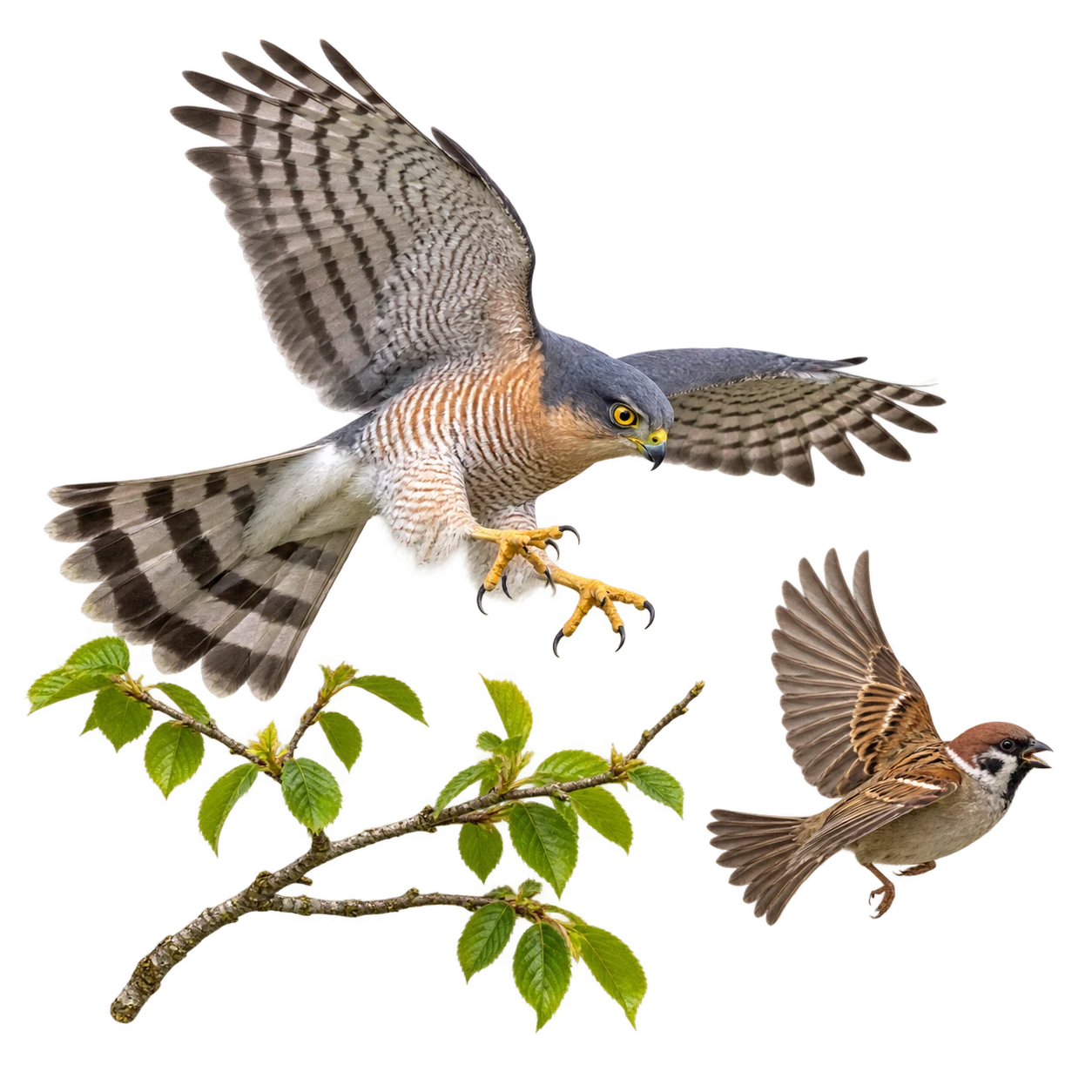
It uses hedges, trees and other cover to approach small birds unnoticed. With short wingbeats and tight turns it pursues its prey through the vegetation.
Distribution
Habitat
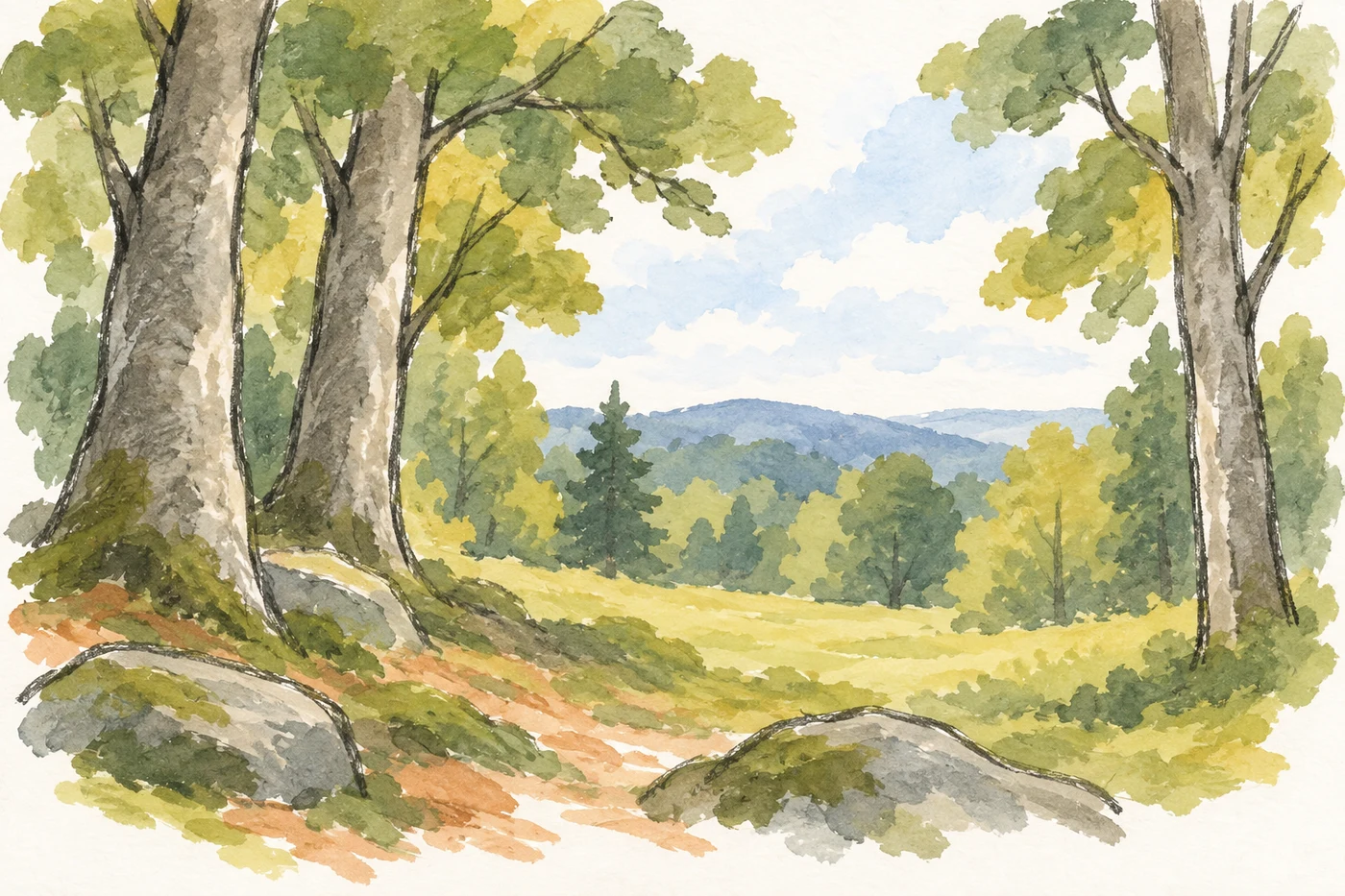
Forests, forest edges, hedges, parks and gardens with cover and plenty of small birds.