White-tailed Eagle

Haliaeetus albicilla
Wingspan

200–245cm

Body length

75–90cm

Weight

4,100–4,600g

Profile

Life expectancy
Clutch size
Usually 2 eggs
Global status
Activity
Migration

Identification

Very broad, almost plank-like wings, a massive bill and a short wedge-shaped tail are good field marks. The white tail and pale head of adults only develop over several years.

Colours

Plumage
Eyes
Legs & feet

Adult

Pale brown head, yellow bill and white tail in adult plumage. Females are similarly coloured but usually larger and heavier.

Behaviour

Adult pairs usually stay in their breeding territory. Their high-pitched call series are heard especially during courtship, often as a duet. After becoming independent, young birds roam much more widely.

Breeding & rearing

The pair may already work on the nest in autumn. In Central Europe egg-laying often begins towards the end of winter. The young stay in the nest for about three months and are still accompanied by their parents after fledging.

Diet

Prey examples

Fish
Waterbirds

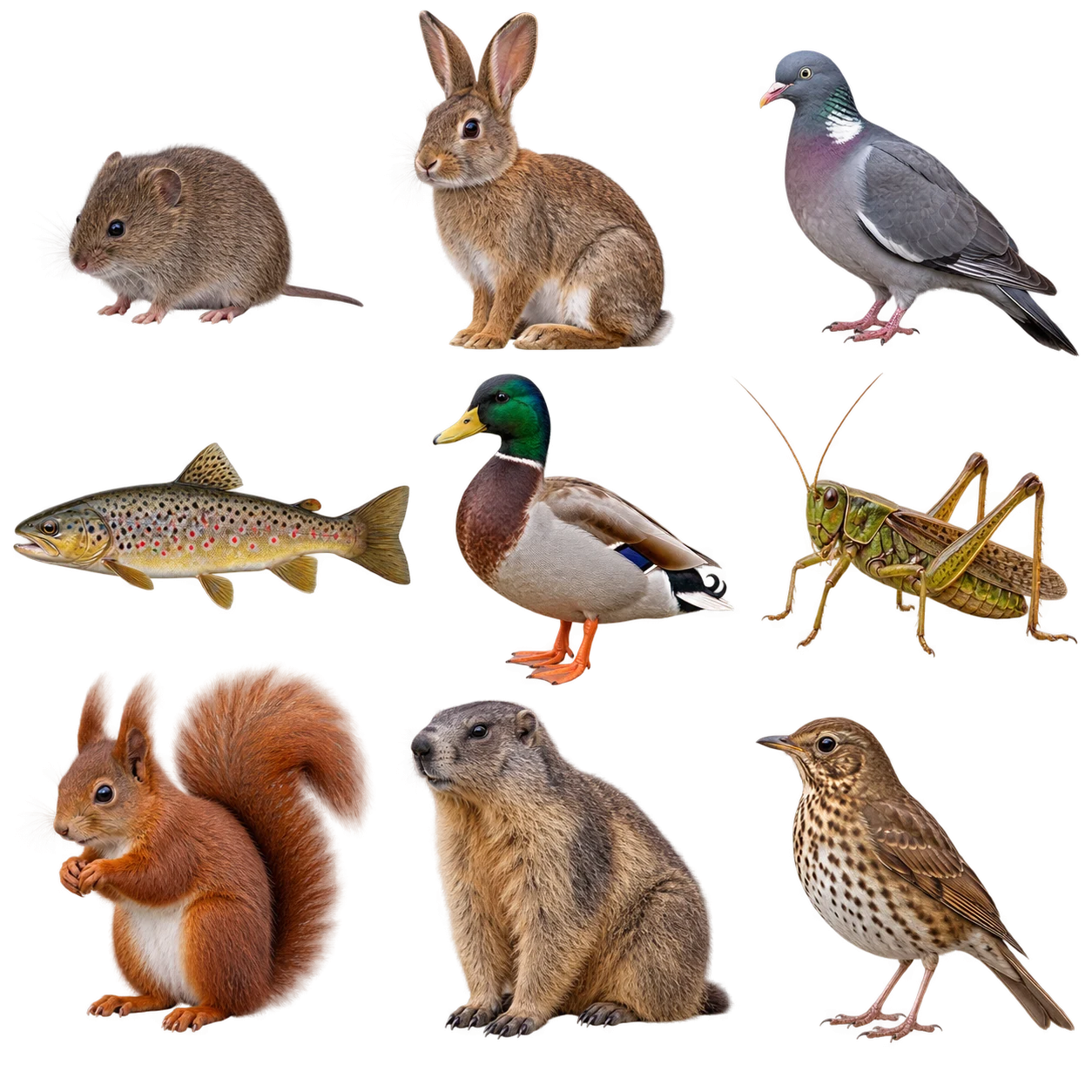
Fish and waterbirds are the White-tailed Eagle's most important prey. It regularly takes carrion, especially in winter, and less often catches mammals.

Hunting
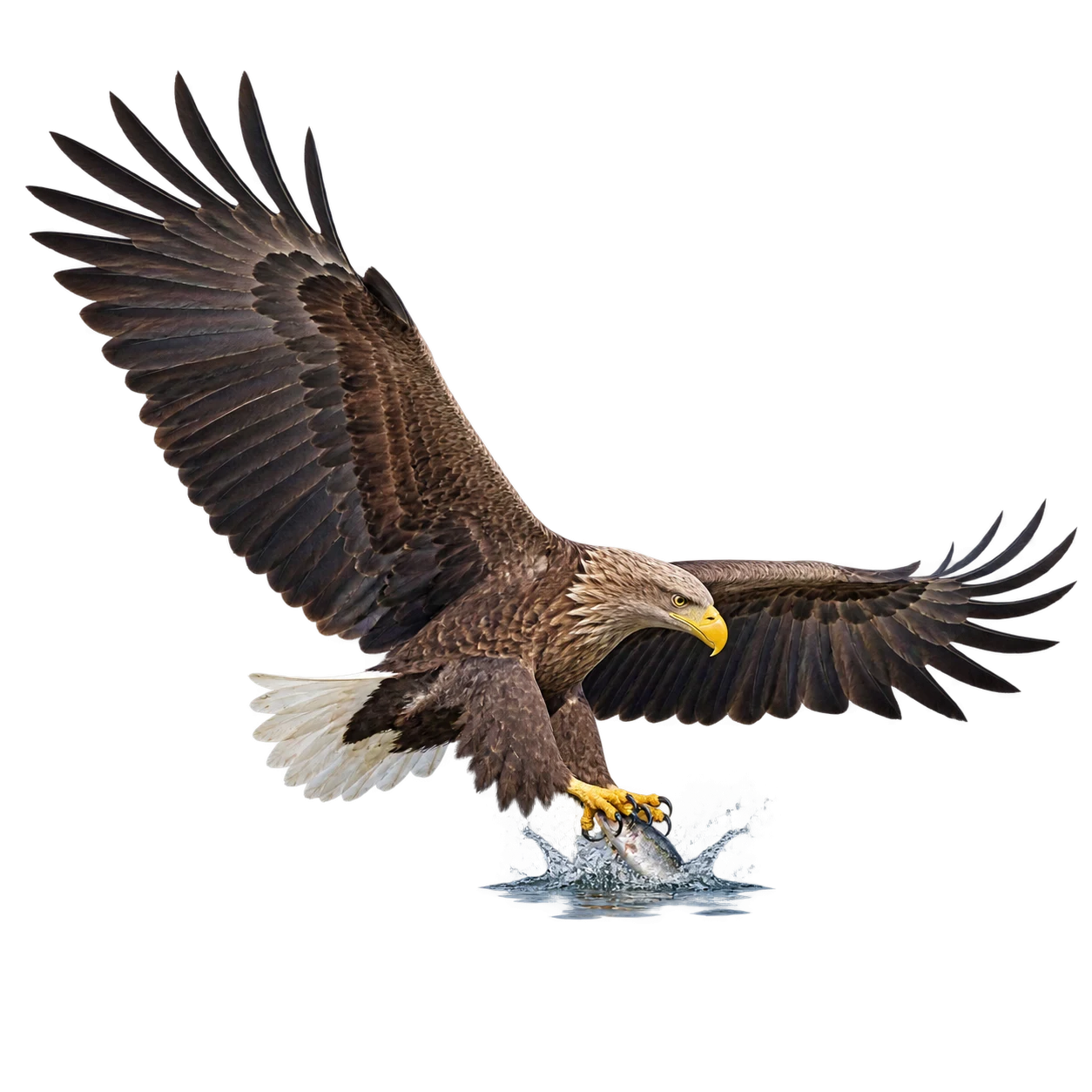
White-tailed Eagle: Fishing · Perch hunting · Search flight · Scavenging

From a perch or in search flight it looks out for fish and waterbirds. It often takes fish near the surface; waterbirds it also catches after a longer chase.

Distribution

Range

Europe & Asia

Status in Germany

Breeding birdWinter visitor

Habitat

Large lakes, rivers and coasts with old trees for the eyrie and undisturbed retreats.

White-tailed Eagle