Osprey
150–170cm
55–65cm
1,300–1,600g
Profile
- Life expectancy
- Clutch size
- 2–3 eggs
- Global status
- Activity
- Migration
Identification
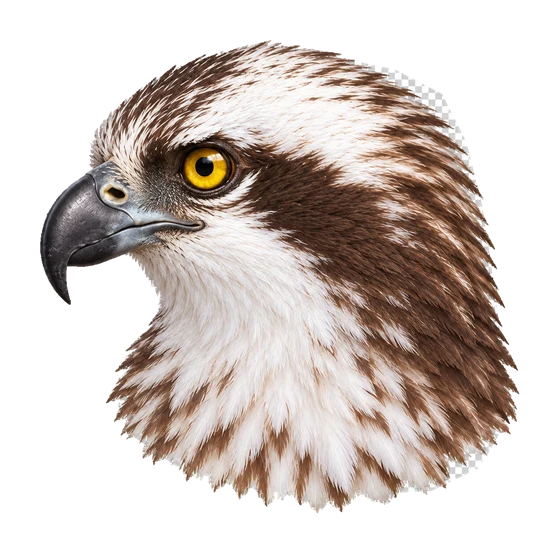
Long wings, conspicuously angled in flight, and pale underparts give an unmistakable flight silhouette. A dark stripe runs through the eye. The body looks slimmer than in the large sea eagles.
Colours
Male
White head with a dark eye-stripe. The breast band is often faint or absent; the underwing coverts are usually less spotted than in the female. The sexes overlap.
Behaviour
It prefers to stay over open water. In courtship the male performs undulating display flights, sometimes with a fish in its talons. It mainly defends the immediate surroundings of the nest.
Breeding & rearing
The large stick nest needs a clear approach: treetops, pylons and nesting platforms are typical sites. Repeated additions let a nest grow over the years. Both parents help to feed the young.
Diet
Prey examples
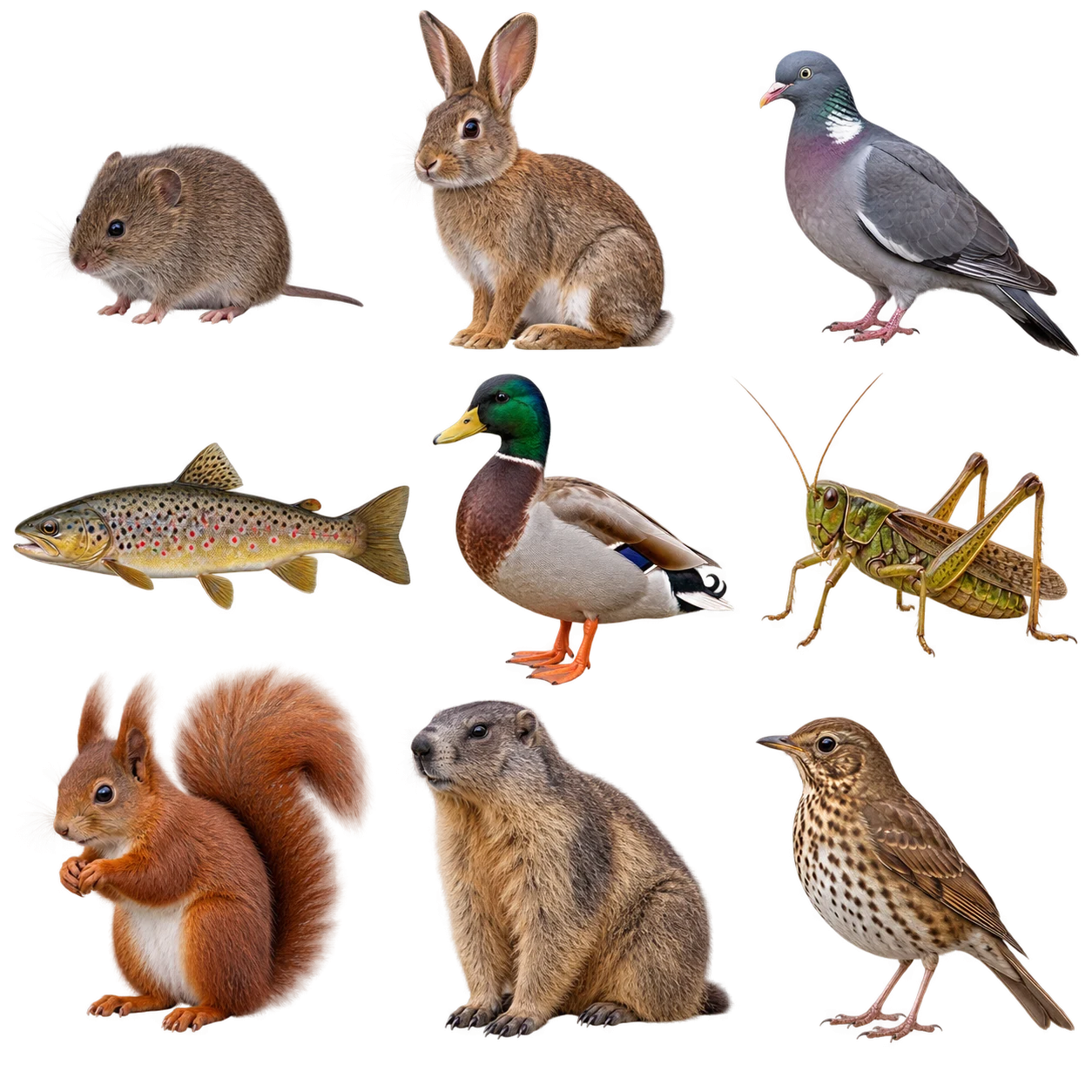
FishThe Osprey feeds almost exclusively on live fish. Other vertebrates or dead fish are very rare exceptions.
Hunting
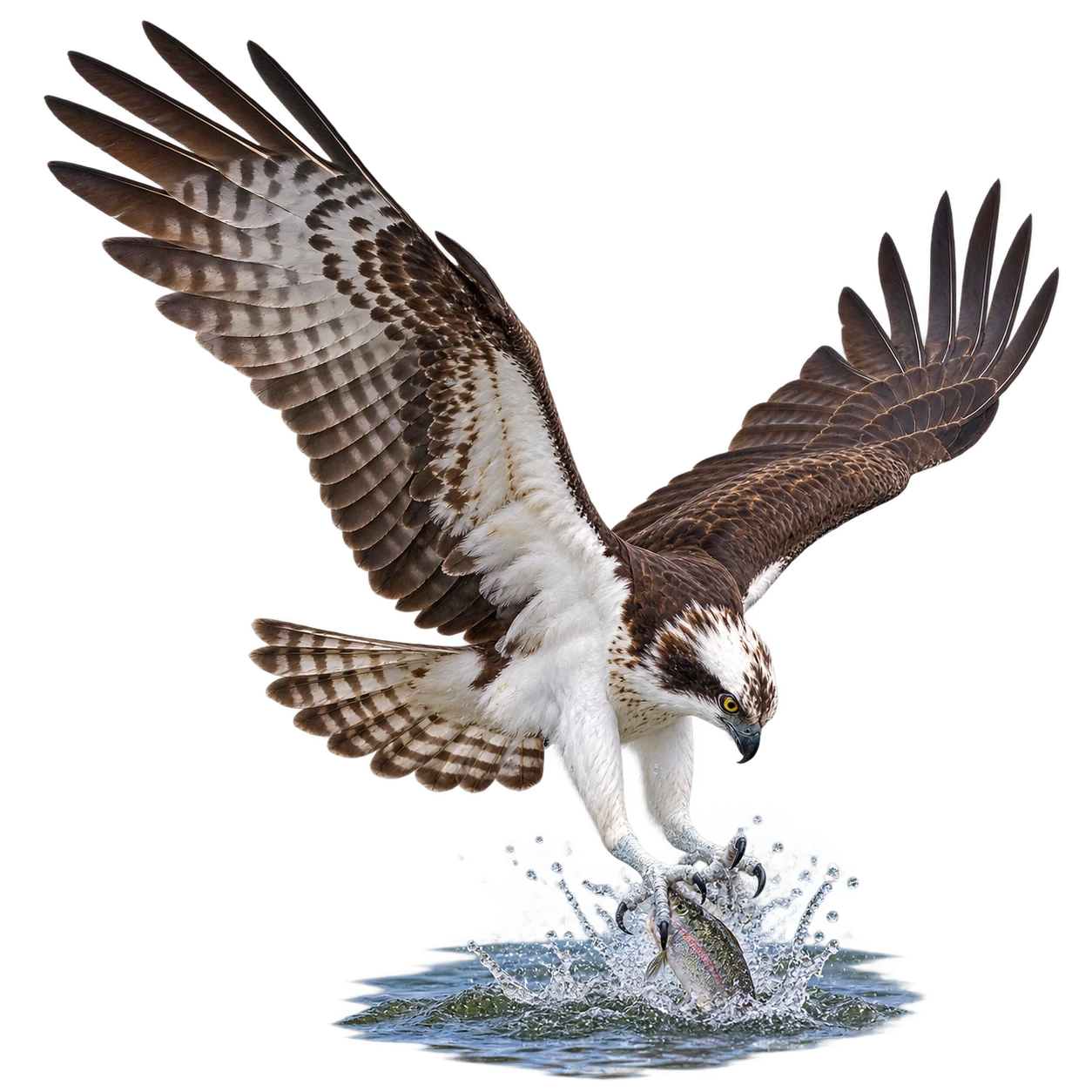
It searches in flight for fish near the water surface. When attacking, it thrusts its talons forward and plunges feet-first into the water.
Distribution
Habitat
Lakes, rivers and coasts rich in fish. Breeds in tall trees, on pylons and on special nesting platforms.