Great Horned Owl
100–145cm
45–65cm
700–1,600g
Profile
- Life expectancy
- Clutch size
- 1–4 eggs
- Global status
- Activity
- Migration
Identification
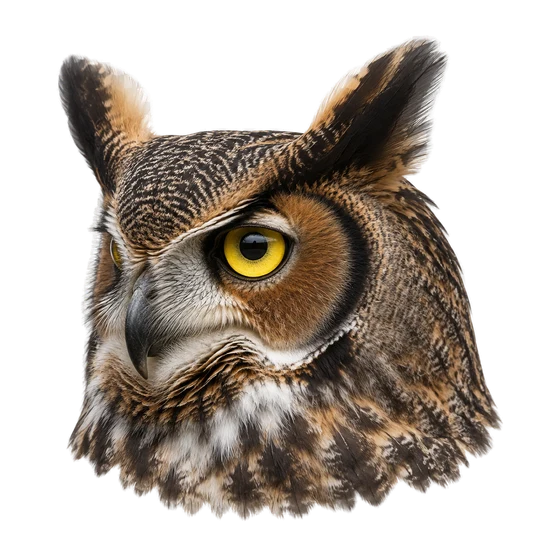
A powerful owl with yellow eyes, prominent ear tufts and a white throat patch. Broad, rounded wings and a compact body characterise its flight silhouette. The brown to grey base colour varies regionally.
Colours
Adult
Greyish-brown to brownish plumage with dark barring, a white throat patch and yellow eyes. The colouring varies markedly by region.
Behaviour
It becomes active especially at dusk and dawn. Pairs defend their territory with deep call series. When threatened, it also snaps its bill and hisses; by day it is sometimes given away by scolding crows or songbirds.
Breeding & rearing
It often takes over old nests of buzzards, crows or other birds. Tree holes, rock ledges and structures are also used. The young are at first covered in soft down and are still fed after leaving the nest.
Diet
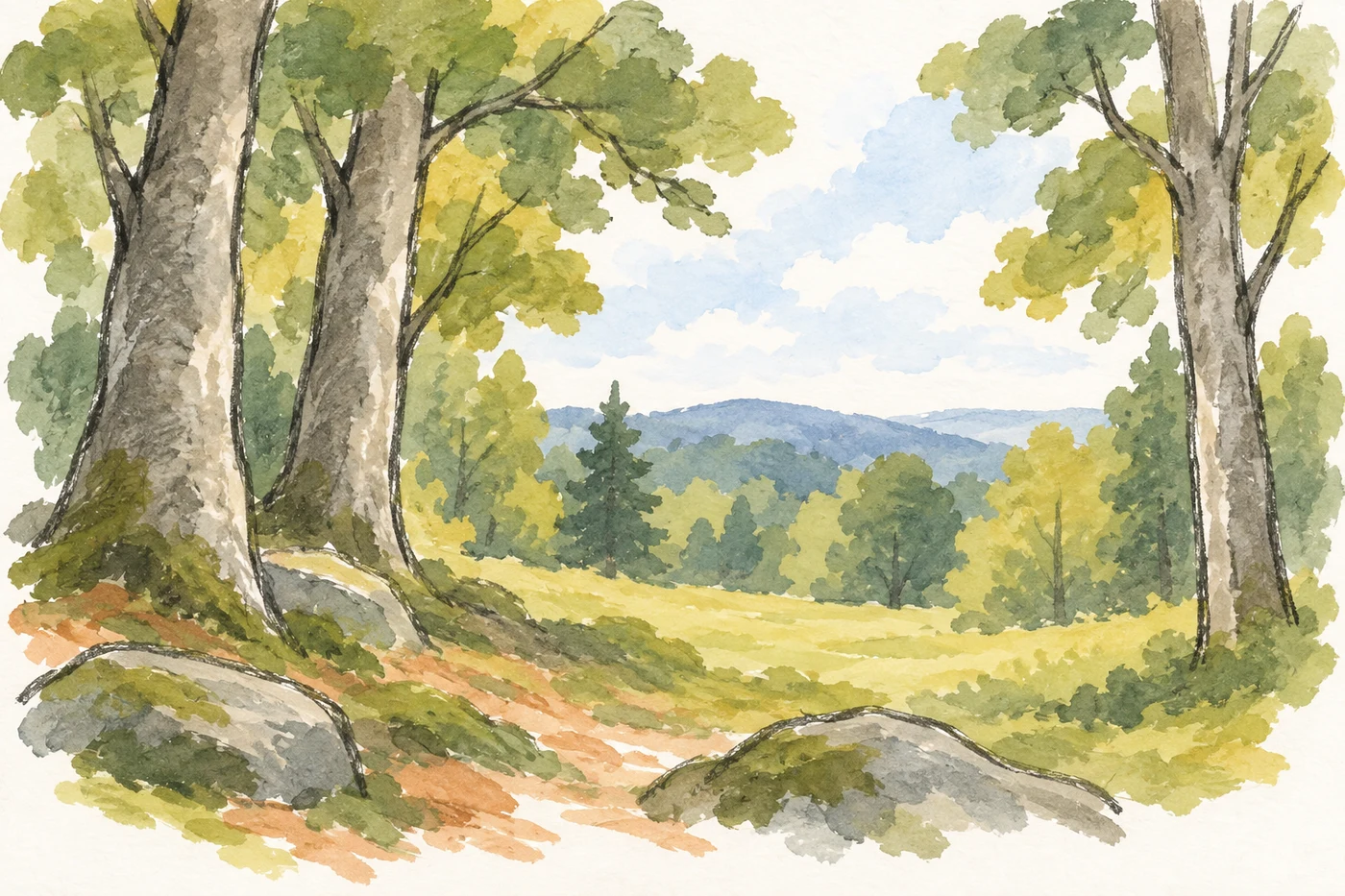
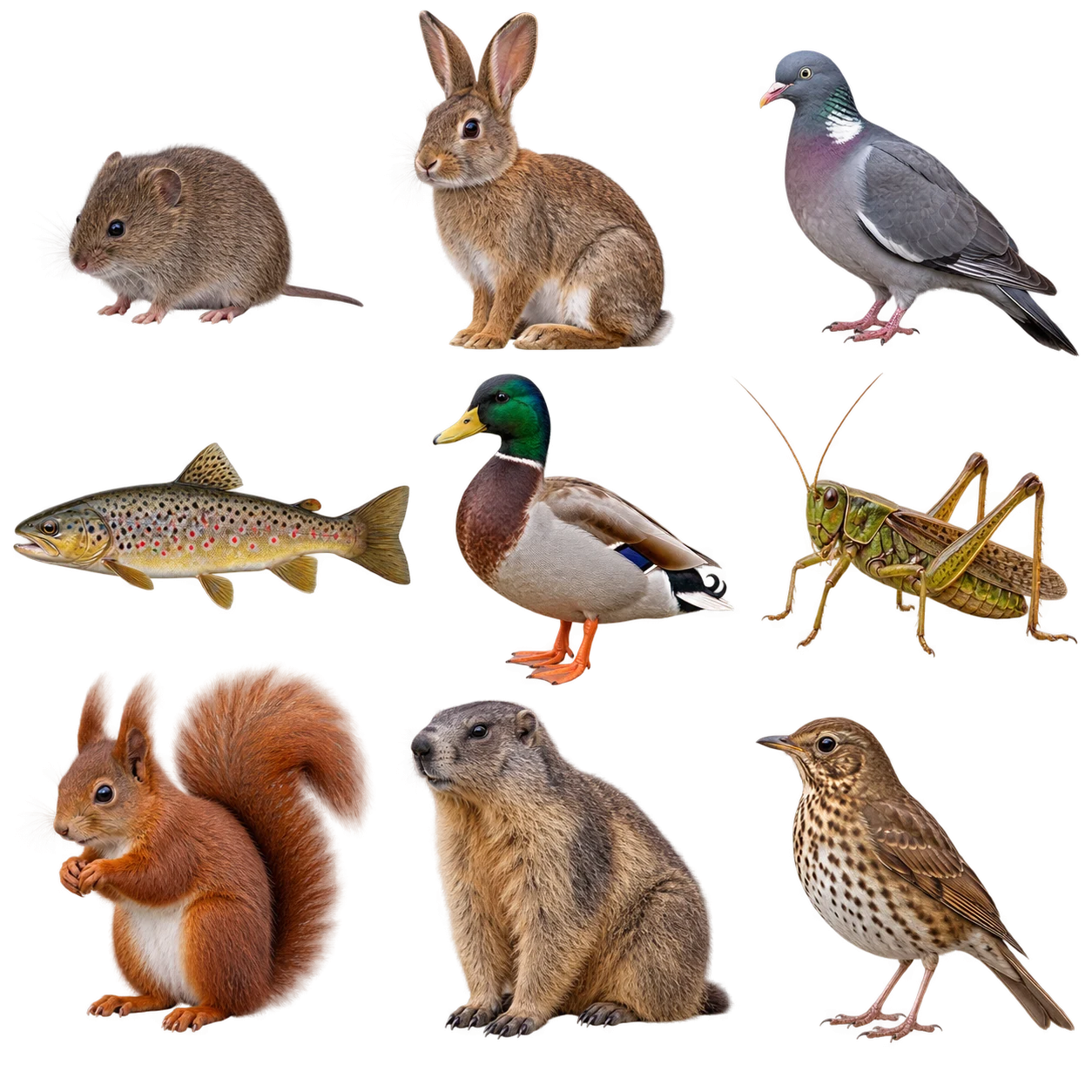
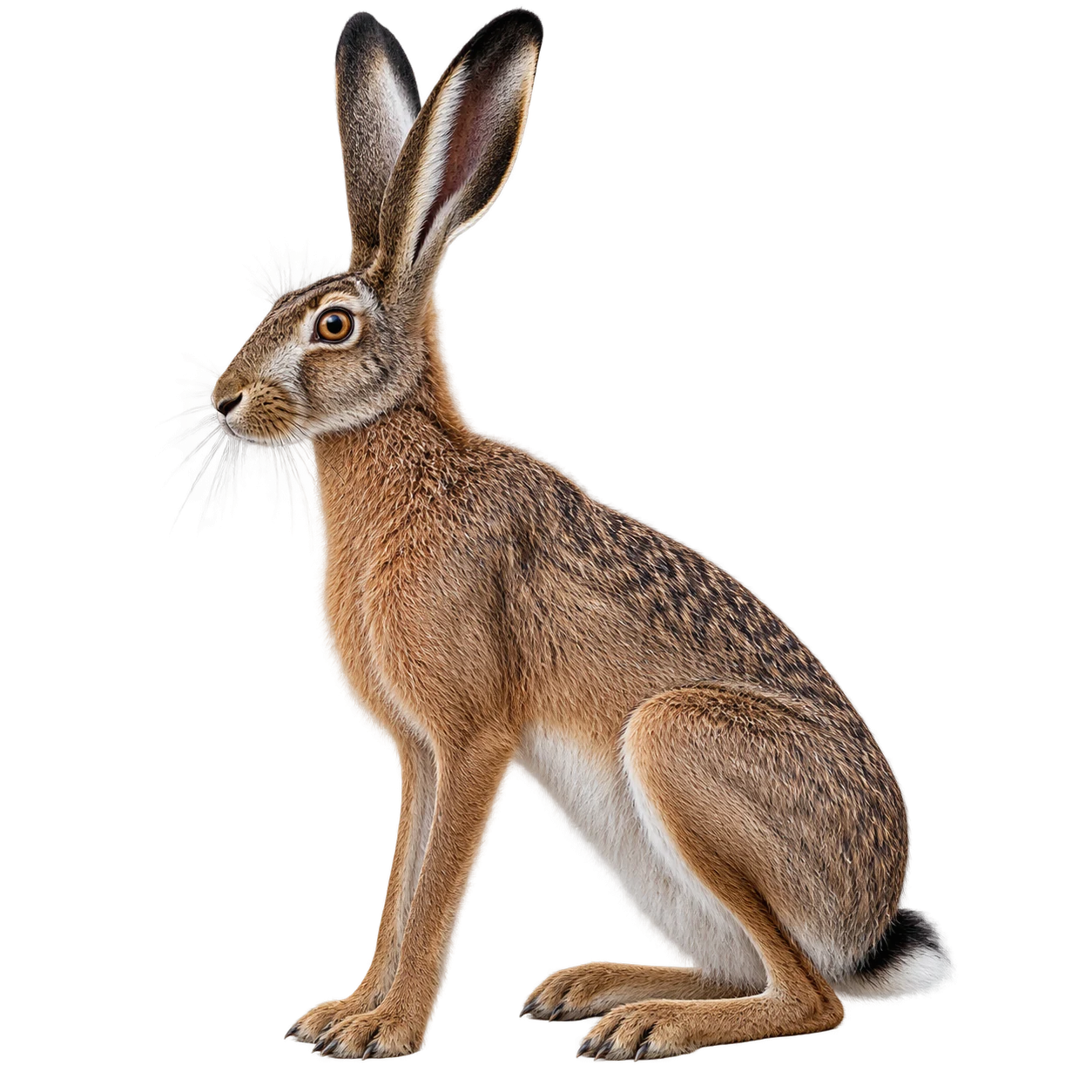
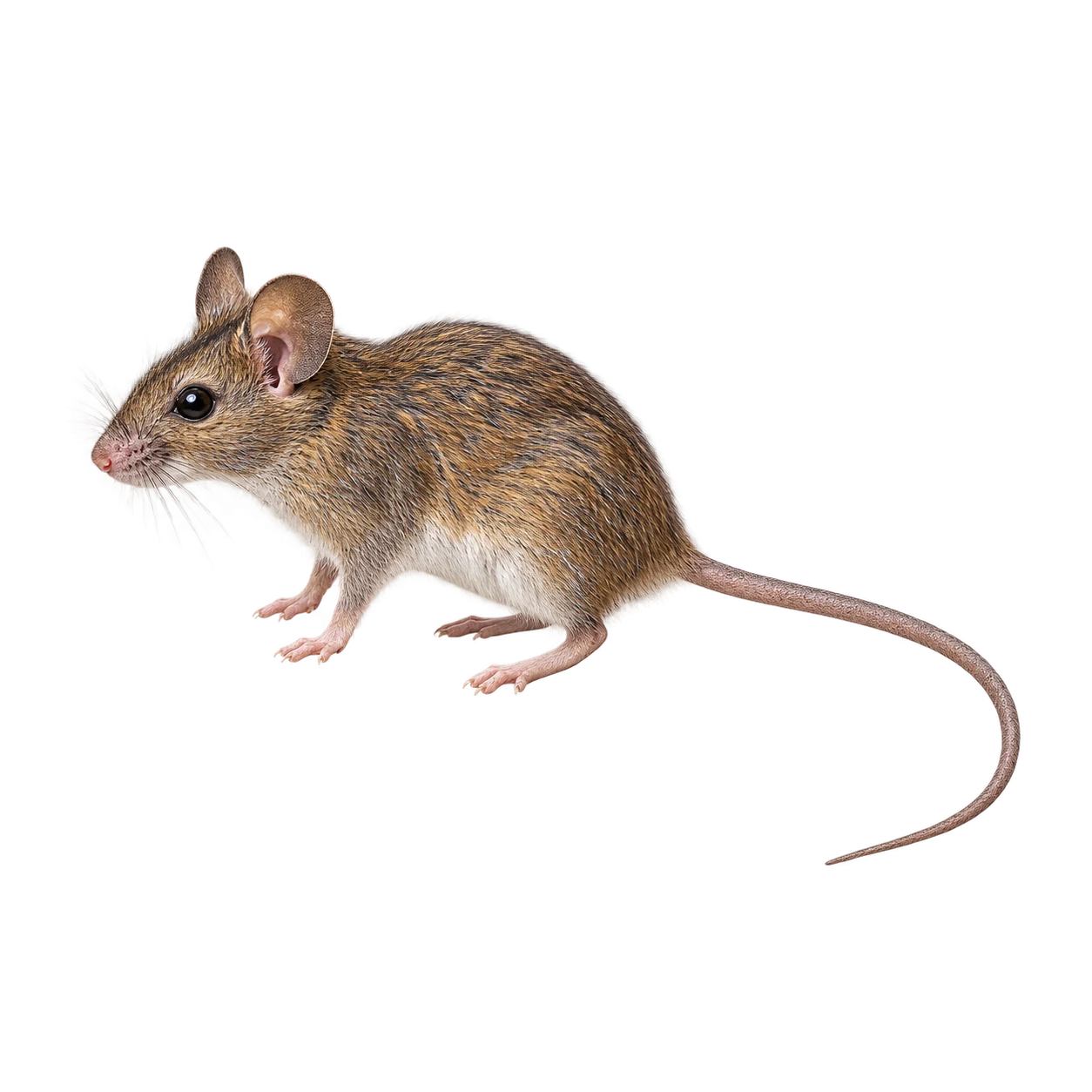
Prey examples
Rabbits
Hares
Mice
SongbirdsThe Great Horned Owl hunts mainly mammals such as rabbits, hares and mice, as well as birds. Other animal groups and occasionally carrion broaden its wide diet.
Hunting
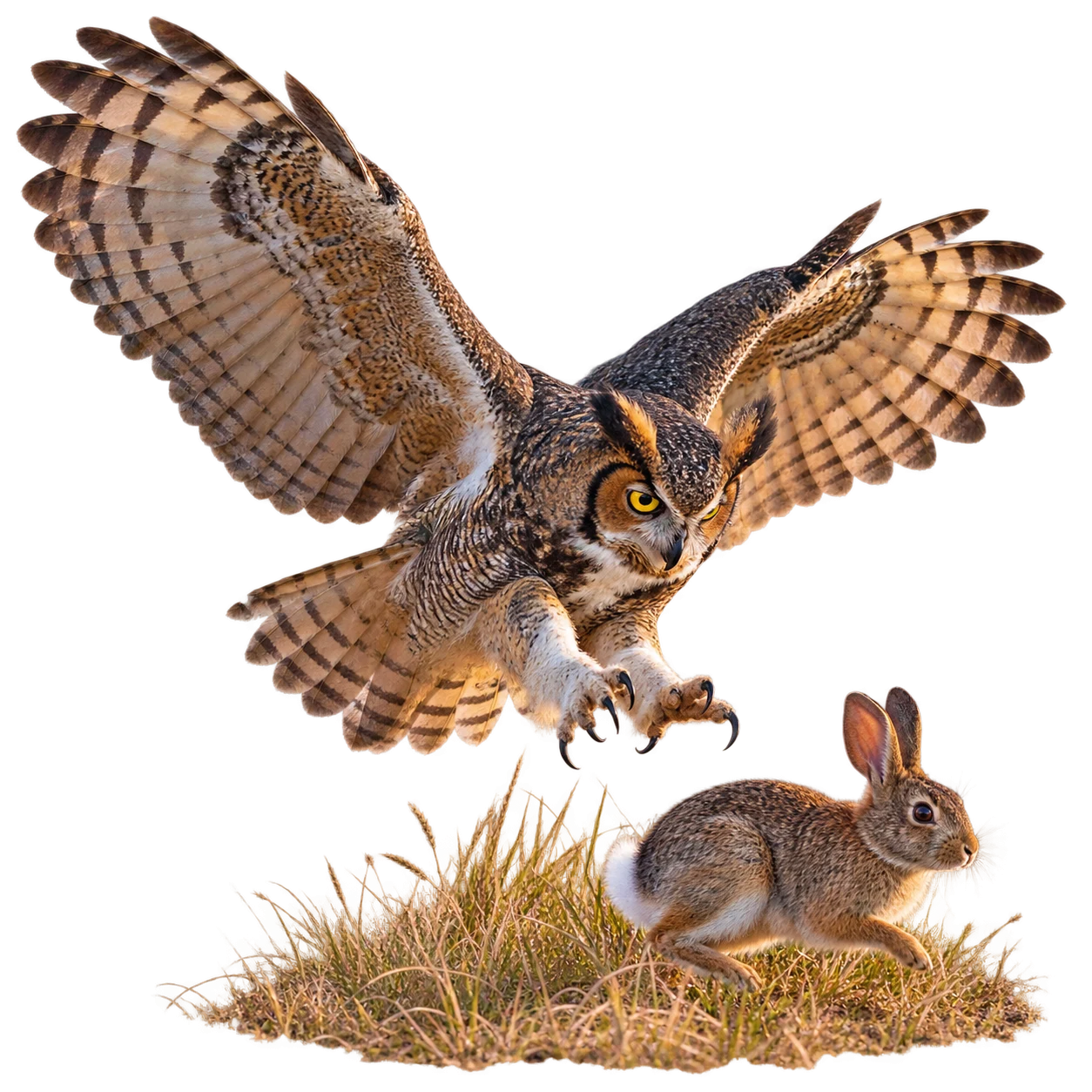
From a perch it locates small mammals and birds by sight and hearing. It then approaches in silent flight and seizes the prey with its powerful talons.
Distribution
Range
North & South America
Habitat
Forests, copses, open country and wetlands with suitable perches.