Striated Caracara

Daptrius australis
Wingspan

115–125cm

Body length

60–65cm

Weight

1,200–1,400g

Profile

Life expectancy
Clutch size
Up to 4 eggs
Global status
Activity
Migration

Identification

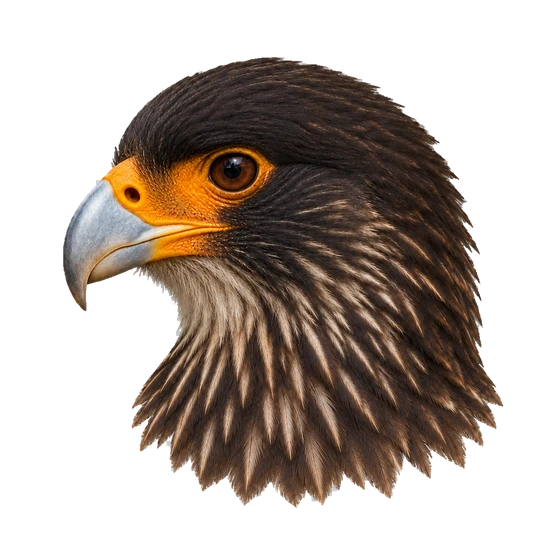
Dark plumage with pale streaks on the neck and breast, strong legs and bare facial skin characterise the Striated Caracara. It is related to the falcons, but looks quite different in its gait and when foraging.

Colours

Plumage
Eyes
Legs & feet

Adult

Dark plumage with pale streaks on the neck and breast, rusty-red thighs and a white tail tip. Males and females are similarly coloured.

Behaviour

Curious exploring and foraging on the ground are part of its daily routine. Young birds in particular are sociable. Near seabird colonies it taps very different food sources and also investigates unfamiliar objects.

Breeding & rearing

Nest sites are often near seabird colonies. There the species breeds alone or with other pairs nearby. The young benefit from the abundant food available during the seabirds’ summer breeding season.

Diet

Prey examples

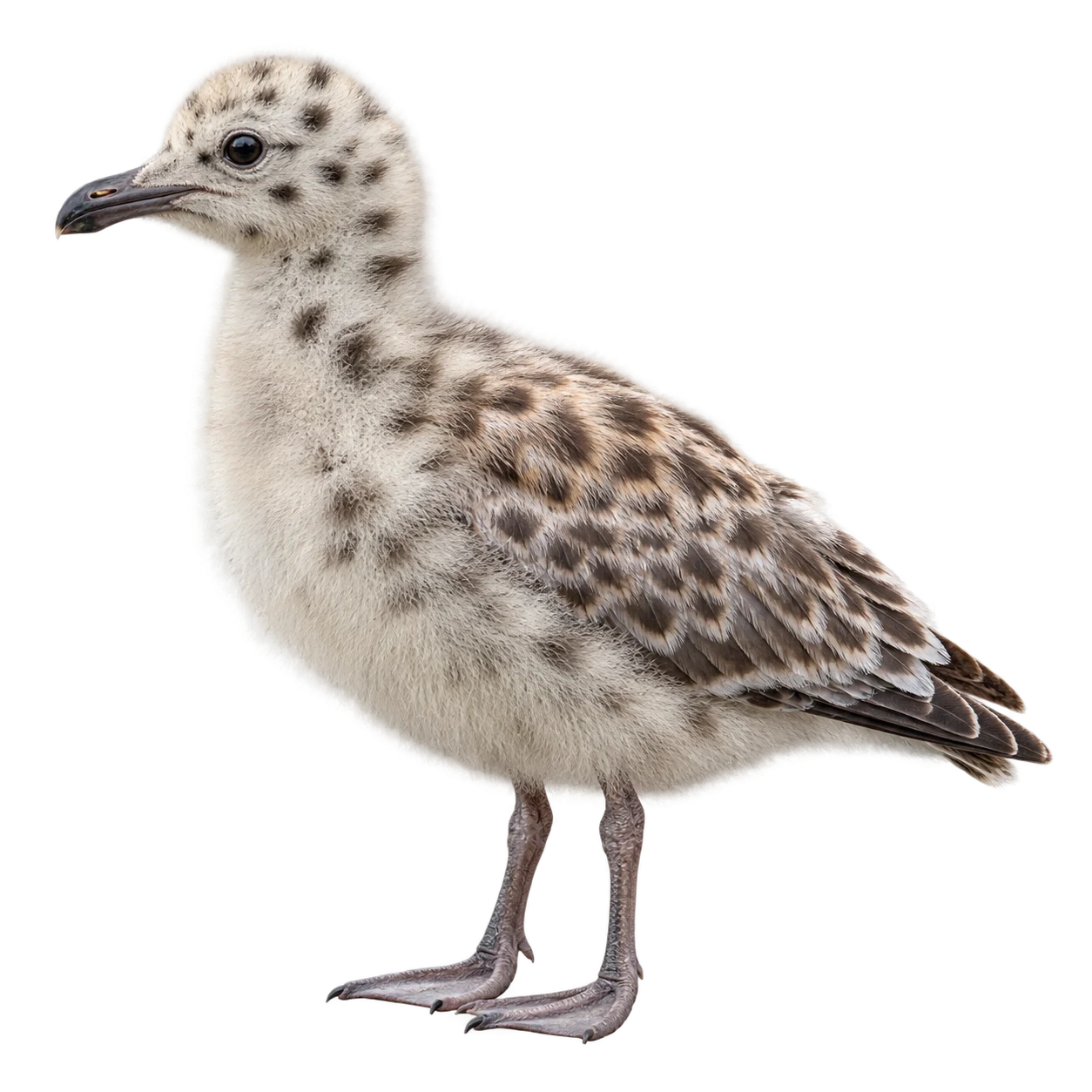
Seabird nestlings
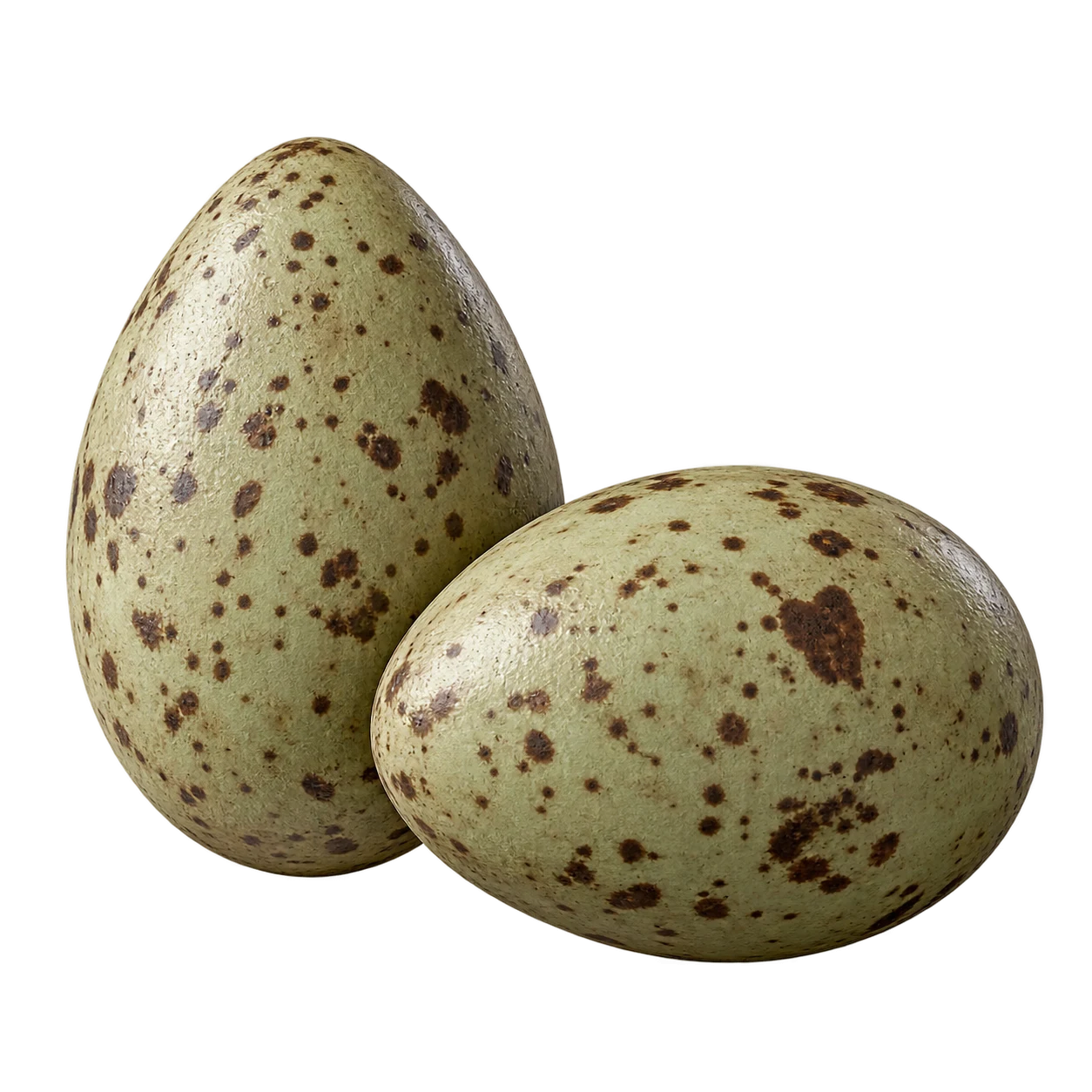
Seabird eggs
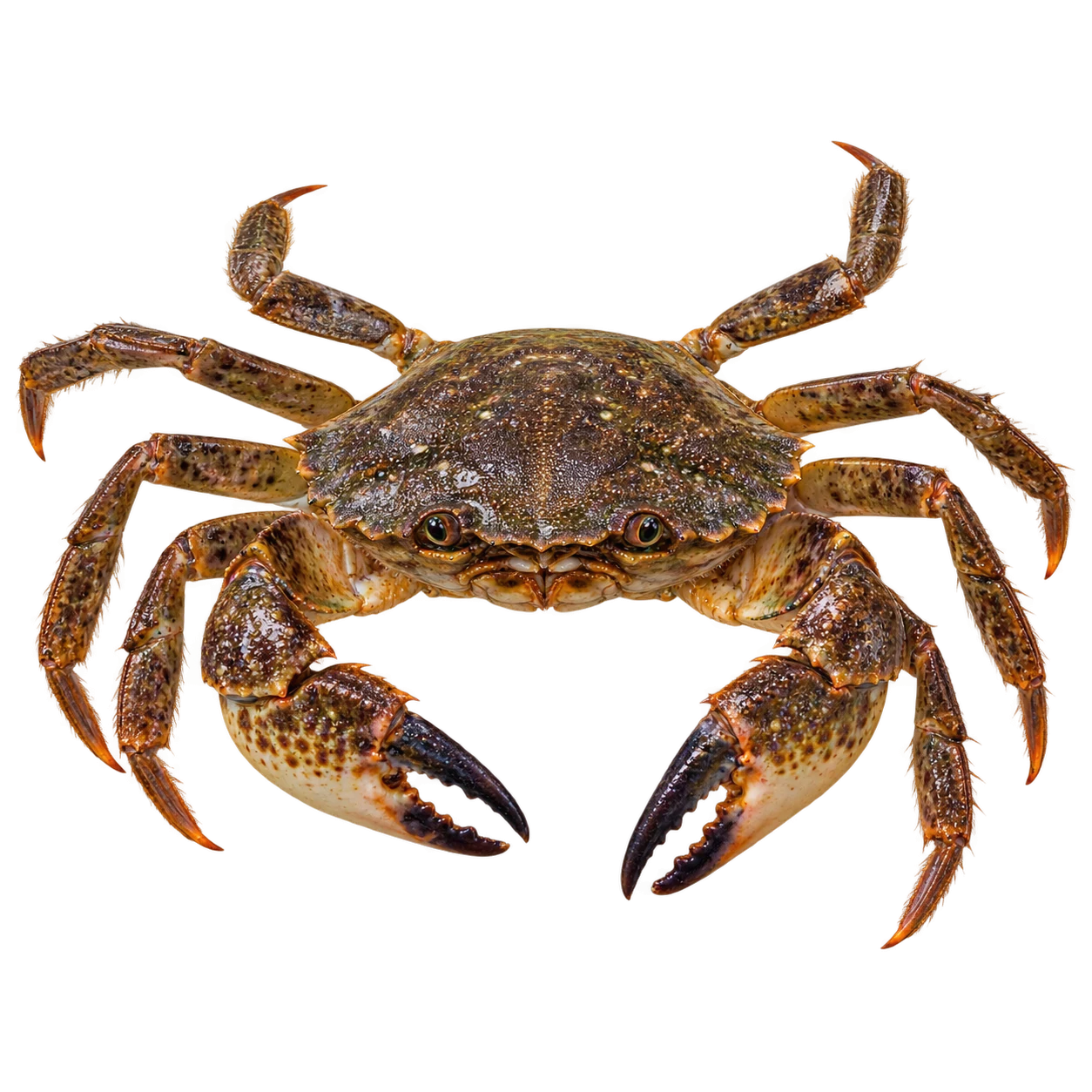
Crustaceans

The Striated Caracara uses seabirds, their eggs and nestlings, as well as carrion. Invertebrates are also important, and the food supply changes markedly with the season.

Hunting
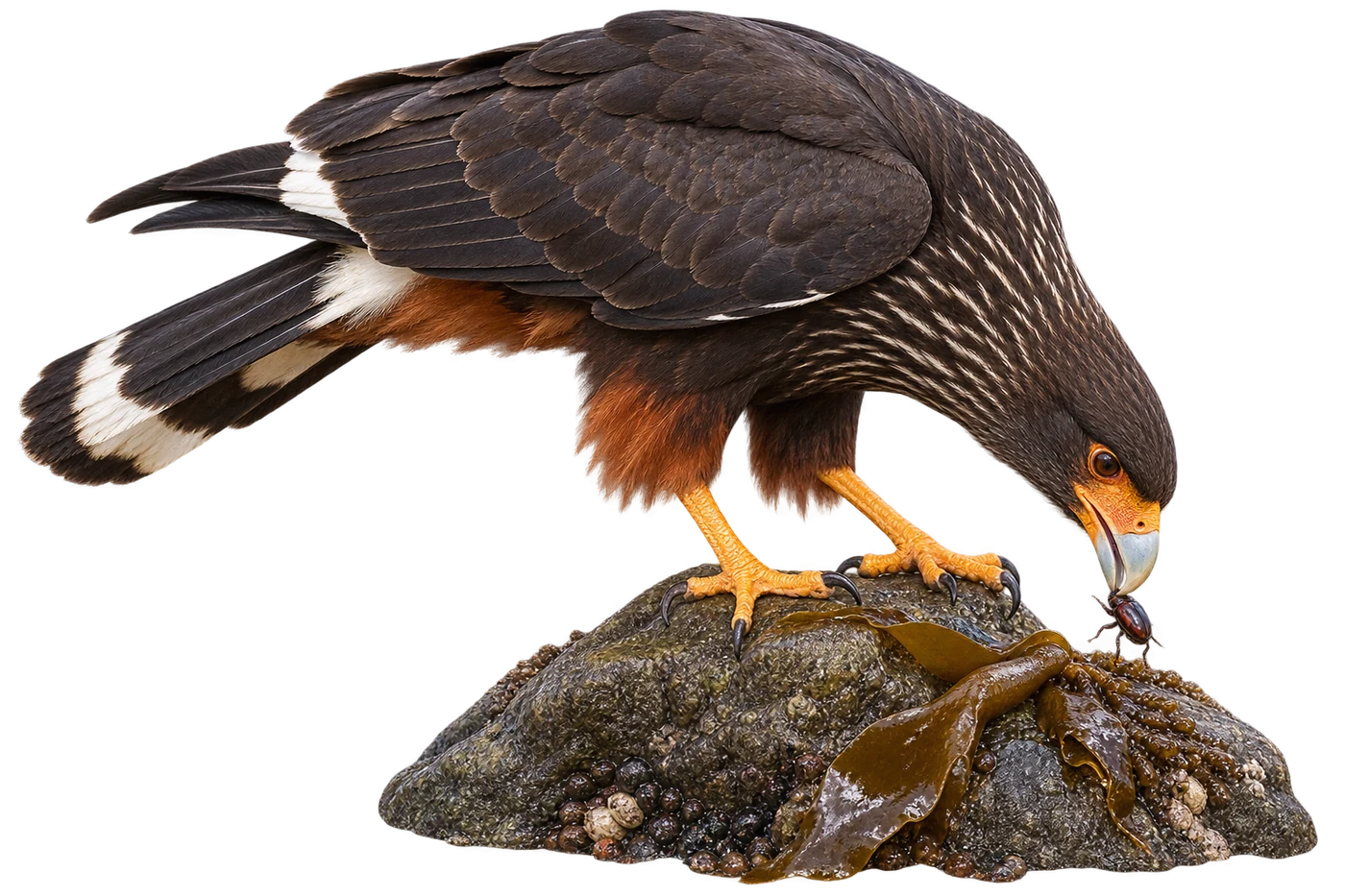
Striated Caracara: Hunting on foot · Scavenging

With bill and feet it searches flotsam, grass tussocks and the ground for invertebrates. In seabird colonies it also takes eggs, nestlings and carrion.

Distribution

Range

Falkland Islands & islands around Tierra del Fuego

Habitat

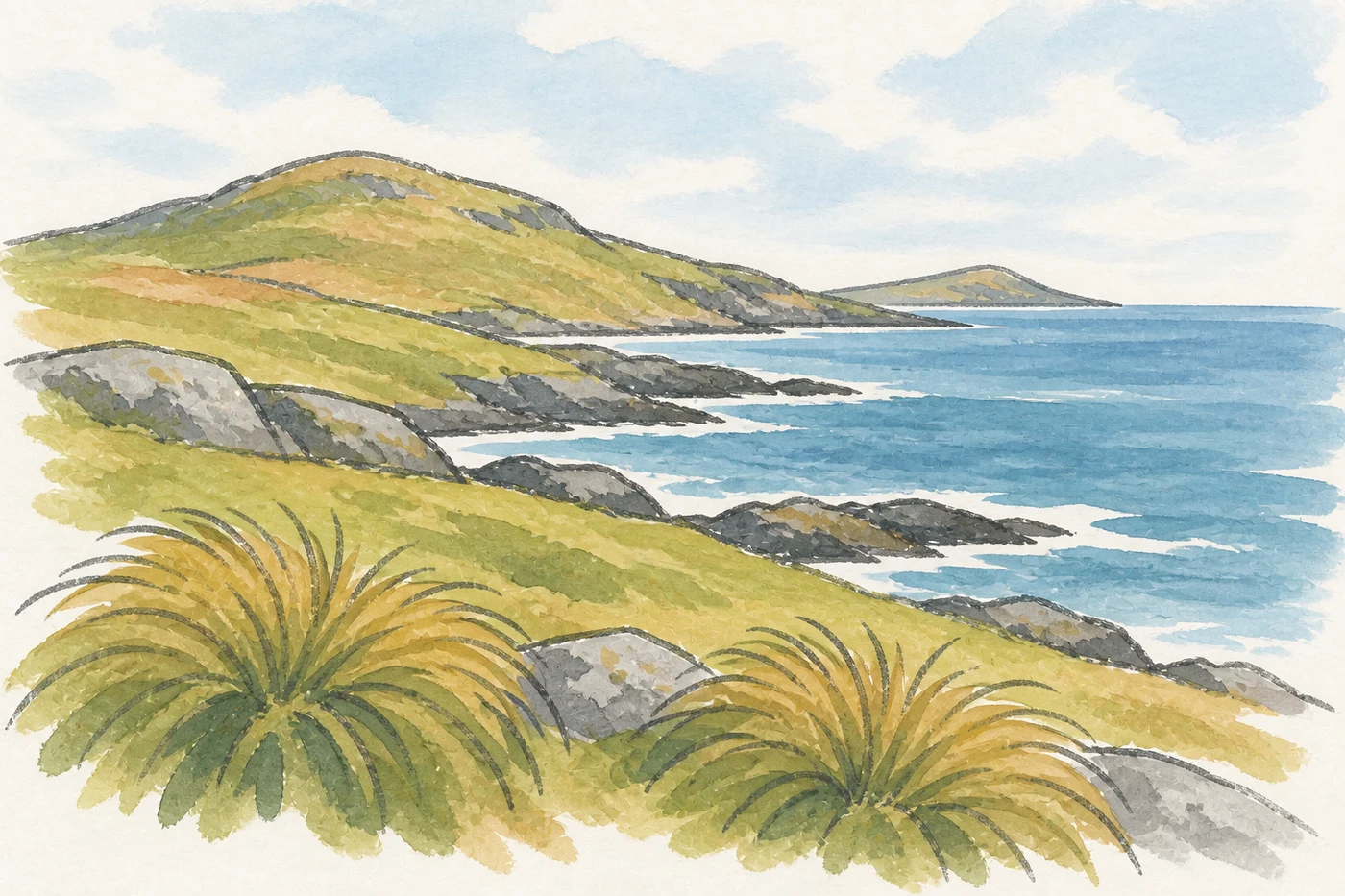
Rocky coasts, tussock grass and islands with seabird colonies. In winter also farms and open areas inland on the islands.
Striated Caracara