Red Kite

Milvus milvus
Wingspan

155–180cm

Body length

60–70cm

Weight

800–1,200g

Profile

Life expectancy
Clutch size
Usually 2 eggs
Global status
Activity
Migration

Identification

A deeply forked rufous tail, long wings and pale patches on the underwings are characteristic. The tail is constantly twisted while soaring and serves as a clearly visible rudder.

Colours

Plumage
Eyes
Legs & feet

Adult

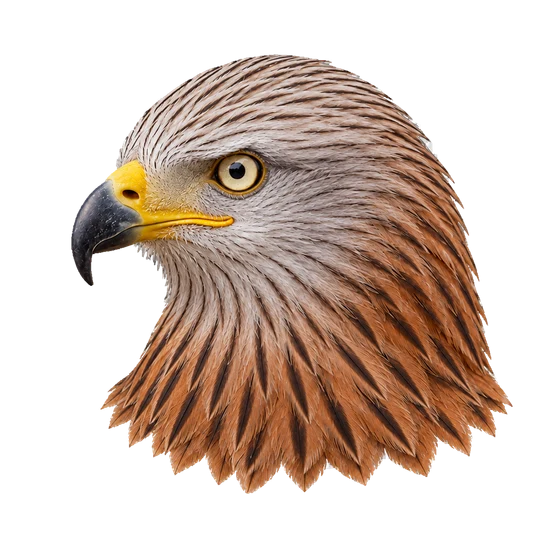
Rufous tail, pale head and strikingly pale patches under the wings. Both sexes are similarly coloured.

Behaviour

Display flights and chases show its great agility. Germany bears a special responsibility for this species, because a large part of the world’s breeding population lives here. Not all birds migrate equally far in winter.

Breeding & rearing

Red Kites nest in trees and need a landscape of woods and open feeding areas. The nest is defended during the breeding season. Old, undisturbed stands of trees are therefore important parts of a suitable territory.

Diet

Prey examples

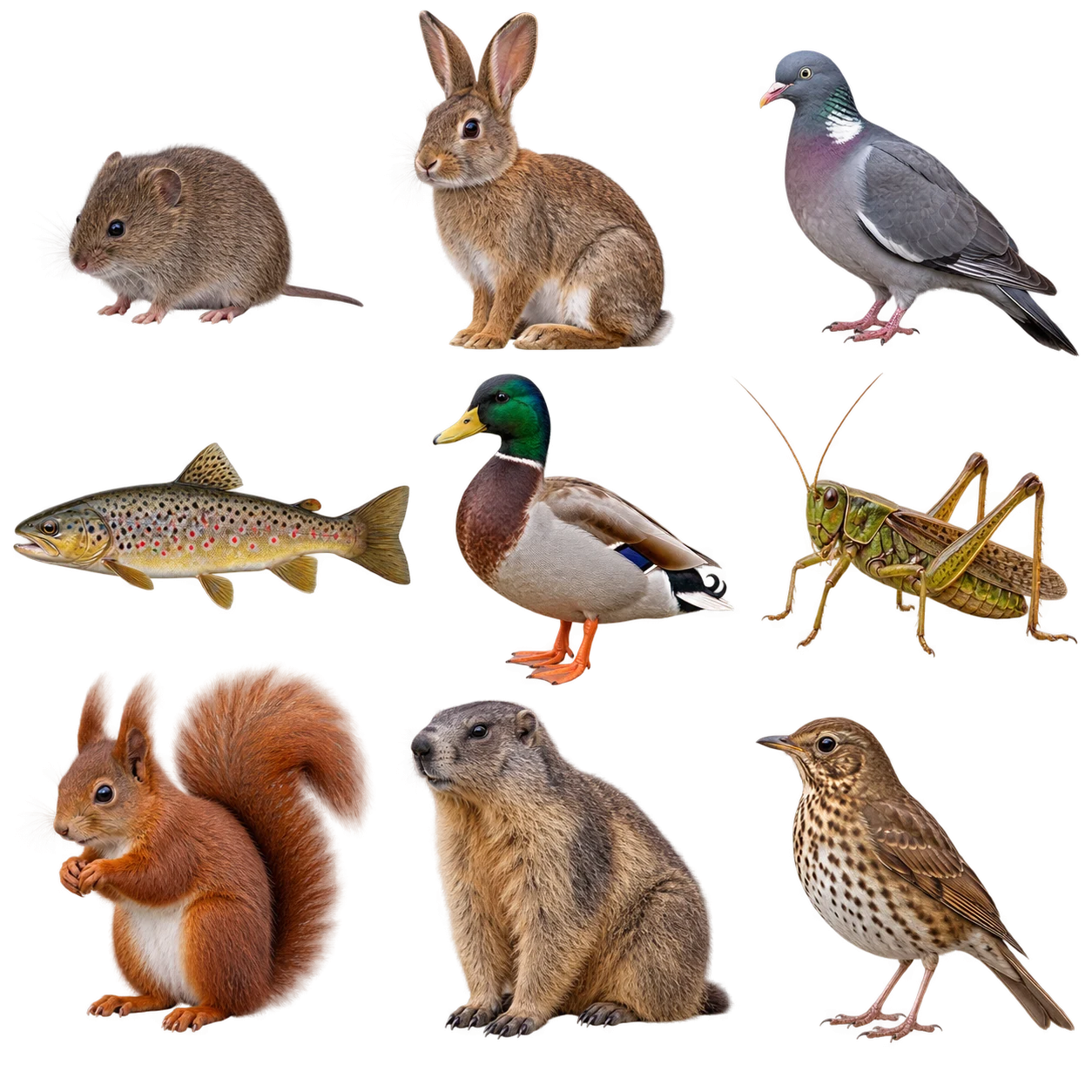
Voles
Songbirds

The Red Kite eats mostly small mammals, birds and carrion. Which food dominates depends on local availability and the season.

Hunting
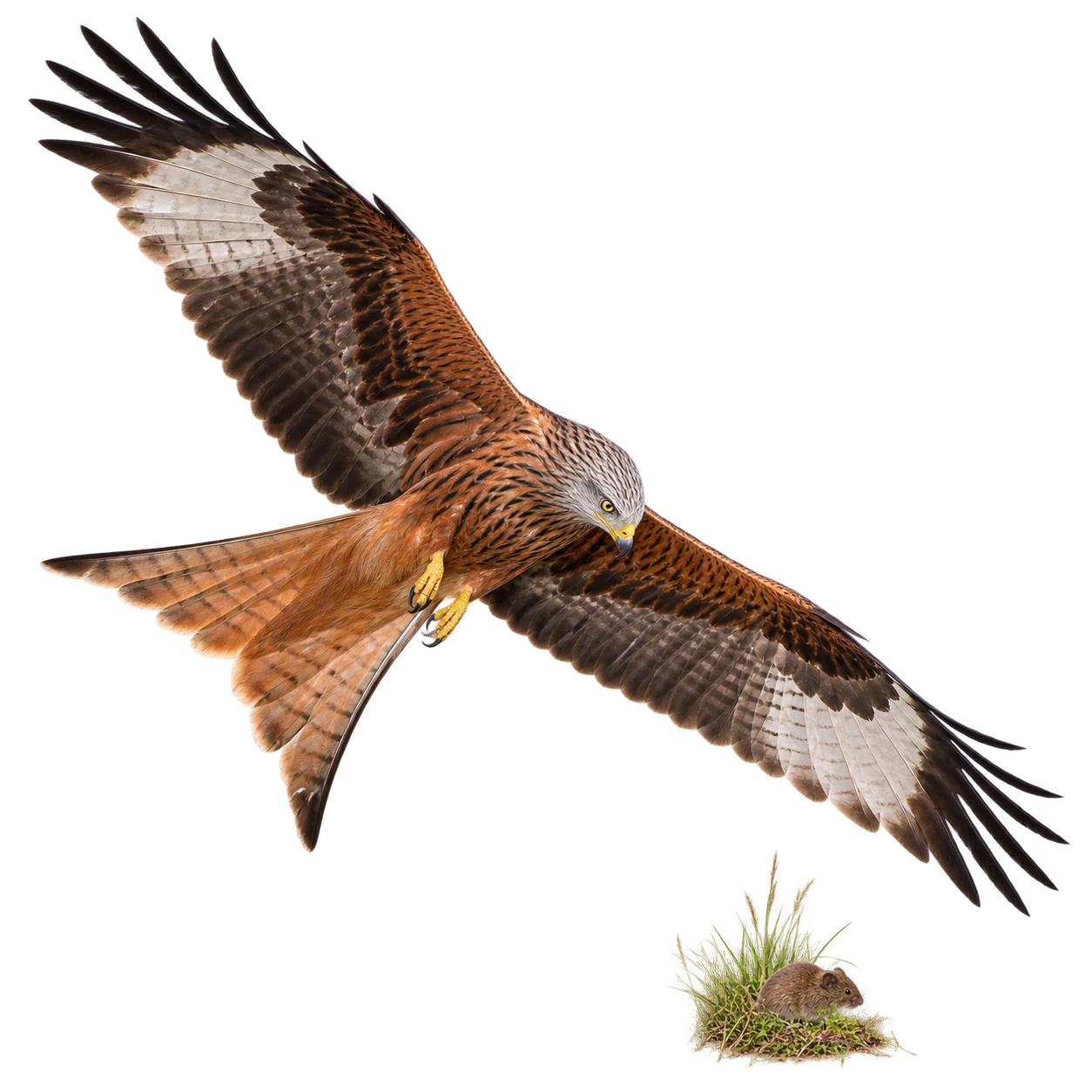
Red Kite: Search flight · Scavenging

With slow wingbeats and gliding phases it scans open areas for small animals and carrion. Its mobile forked tail helps it steer before it drops to the ground to strike.

Distribution

Range

Mainly Europe

Status in Germany

Habitat

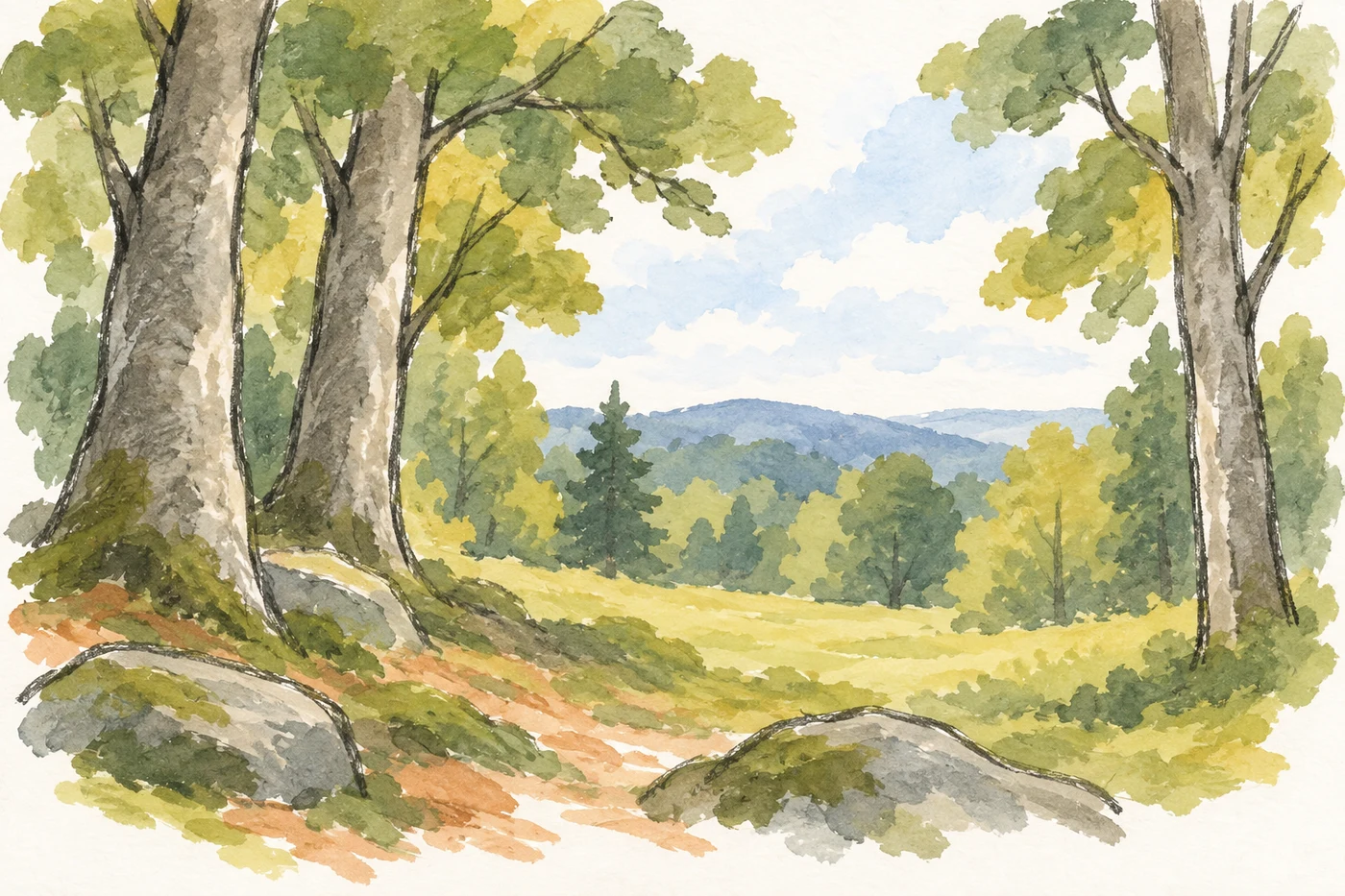
Varied farmland with meadows, arable fields, copses and old forest edges.
Red Kite