Gyrfalcon

Falco rusticolus
Wingspan

110–135cm

Body length

50–65cm

Weight

950–1,300g

Profile

Life expectancy
Clutch size
1–5 eggs
Global status
Activity
Migration
Falconry

Identification

The largest falcon looks powerful and long-tailed. The broad wings taper into pointed hands. White, grey and dark birds belong to the same species; colour alone reveals neither age nor sex.

Colours

Plumage
Eyes
Legs & feet

Adult · Grey

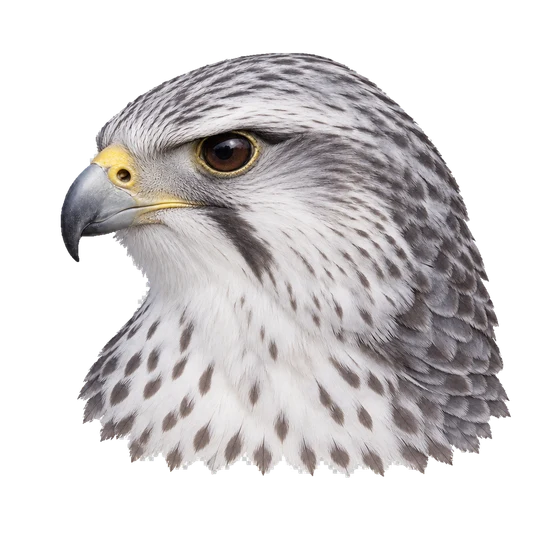
Grey upperparts with bars, pale underparts with dark spots. Cere and feet are yellow.

White, grey and dark describe sections of a continuous colour spectrum. Males and females have the same plumage colours.

Behaviour

Gyrfalcons usually live alone or in pairs and defend their breeding area vigorously. In courtship the male performs dives and rolls. In winter, birds from high Arctic latitudes may appear further south.

Breeding & rearing

Sheltered rock ledges or old nests of other large birds serve as nest sites. The Gyrfalcon does not build its own stick nest. Instead a shallow scrape is prepared; the young grow up there over several weeks.

Diet

Prey examples

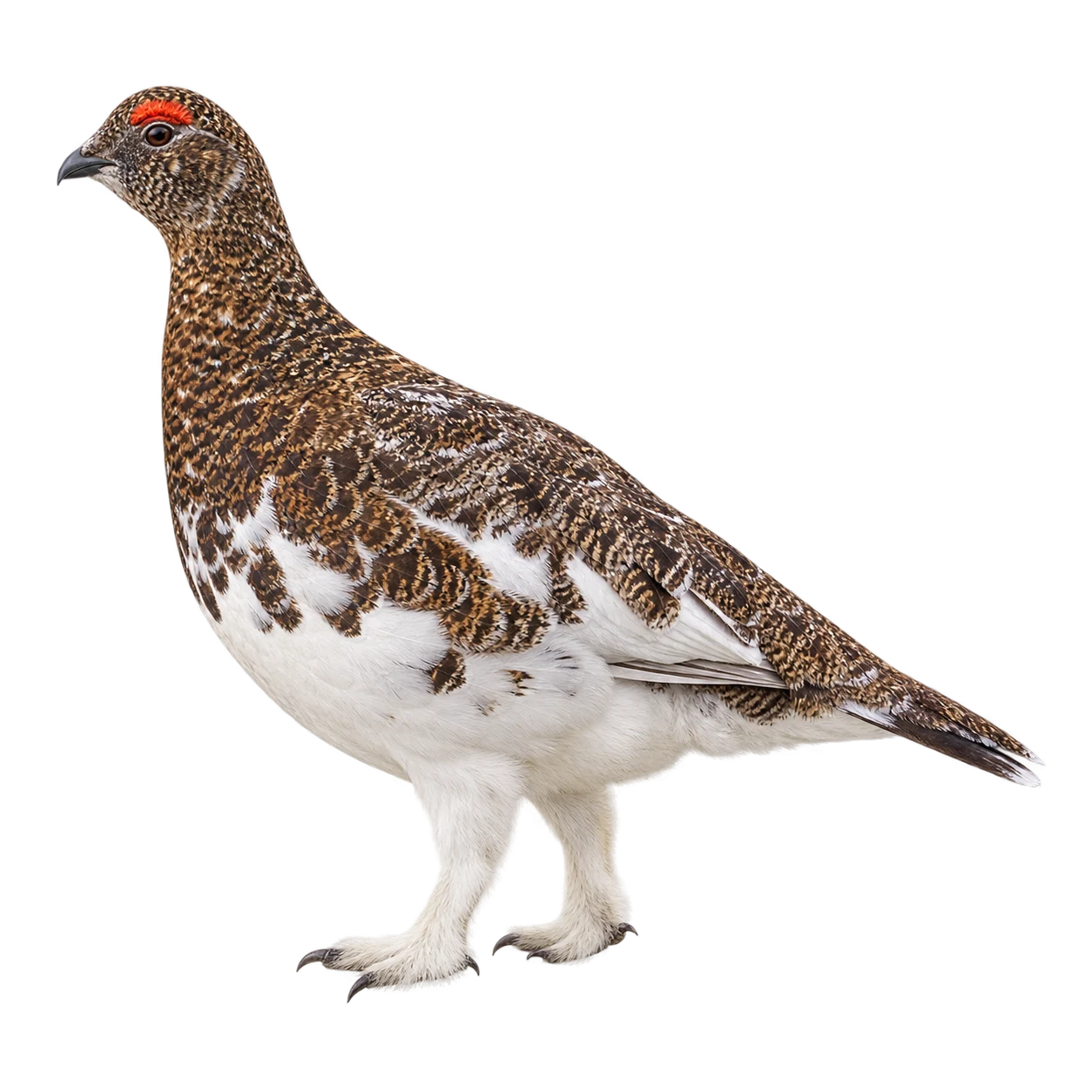
Ptarmigan

In many places ptarmigan are the Gyrfalcon's most important prey. Depending on the region, other birds and smaller mammals are added.

Hunting
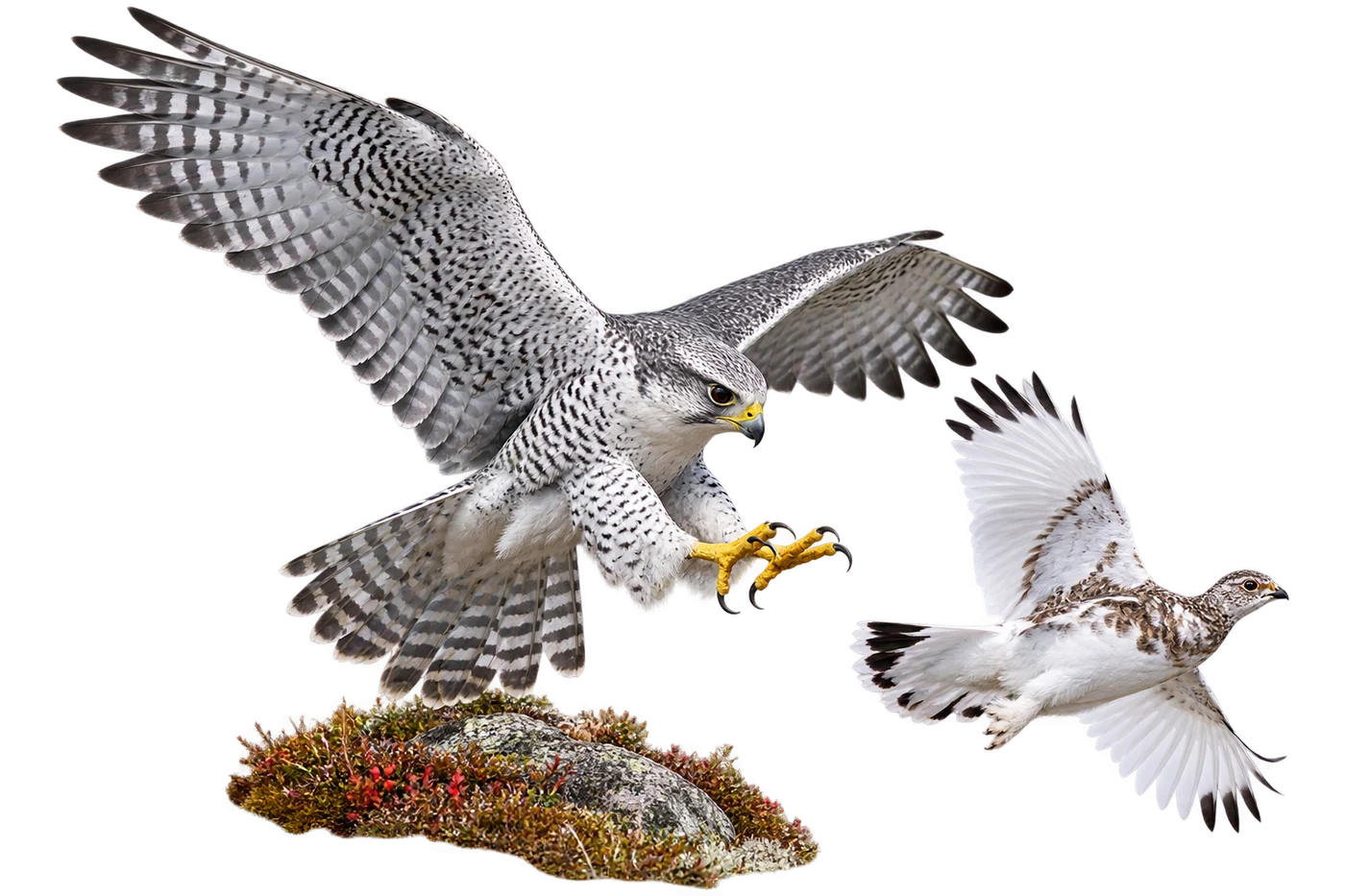
Gyrfalcon: Pursuit · Ambush hunting

It often approaches prey birds fast and low, following the contours of the terrain. In the ensuing chase it can tire its prey out over long distances.

Distribution

Range

Arctic of the Northern Hemisphere

Status in Germany

Rare visitor

Habitat

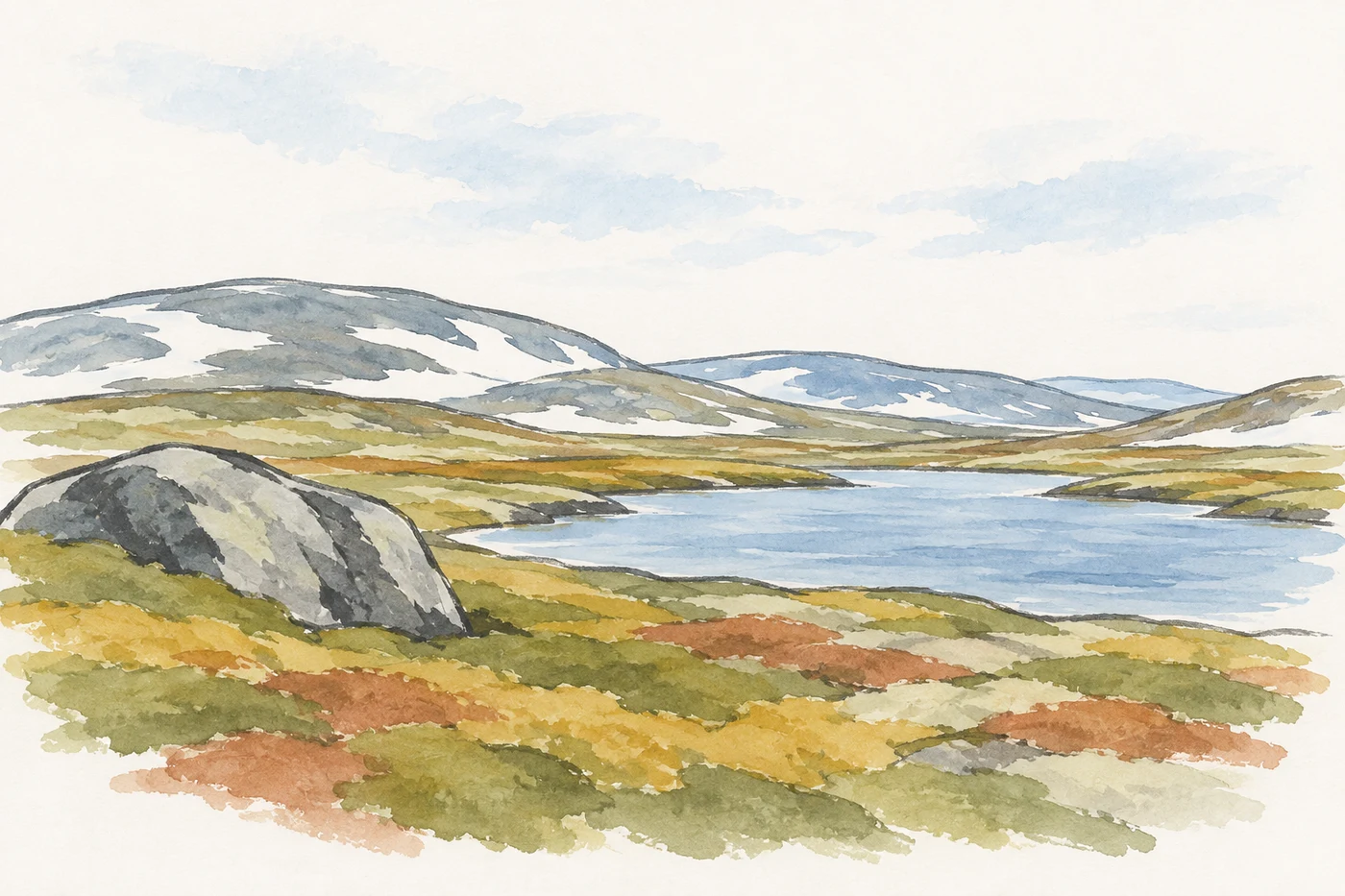
Open tundra, rocky coasts and mountains. In winter also grassland and wide fields.
Gyrfalcon