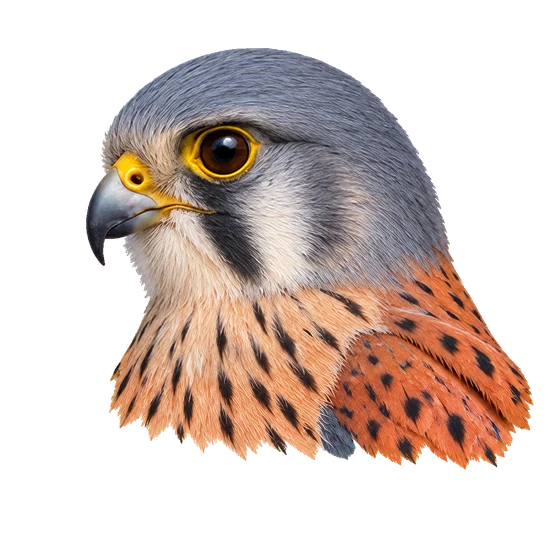
Common Kestrel
65–85cm
30–40cm
140–250g
Profile
- Life expectancy
- Clutch size
- 4–5 eggs
- Global status
- Activity
- Migration
Identification
A small falcon with pointed wings and a long tail. In the male, the grey head and tail contrast with the rufous-brown back. Females and juveniles are mainly brown and more heavily barred.
Colours
Male
Grey head and grey tail with a dark terminal band. The rufous-brown back is spotted dark.
Behaviour
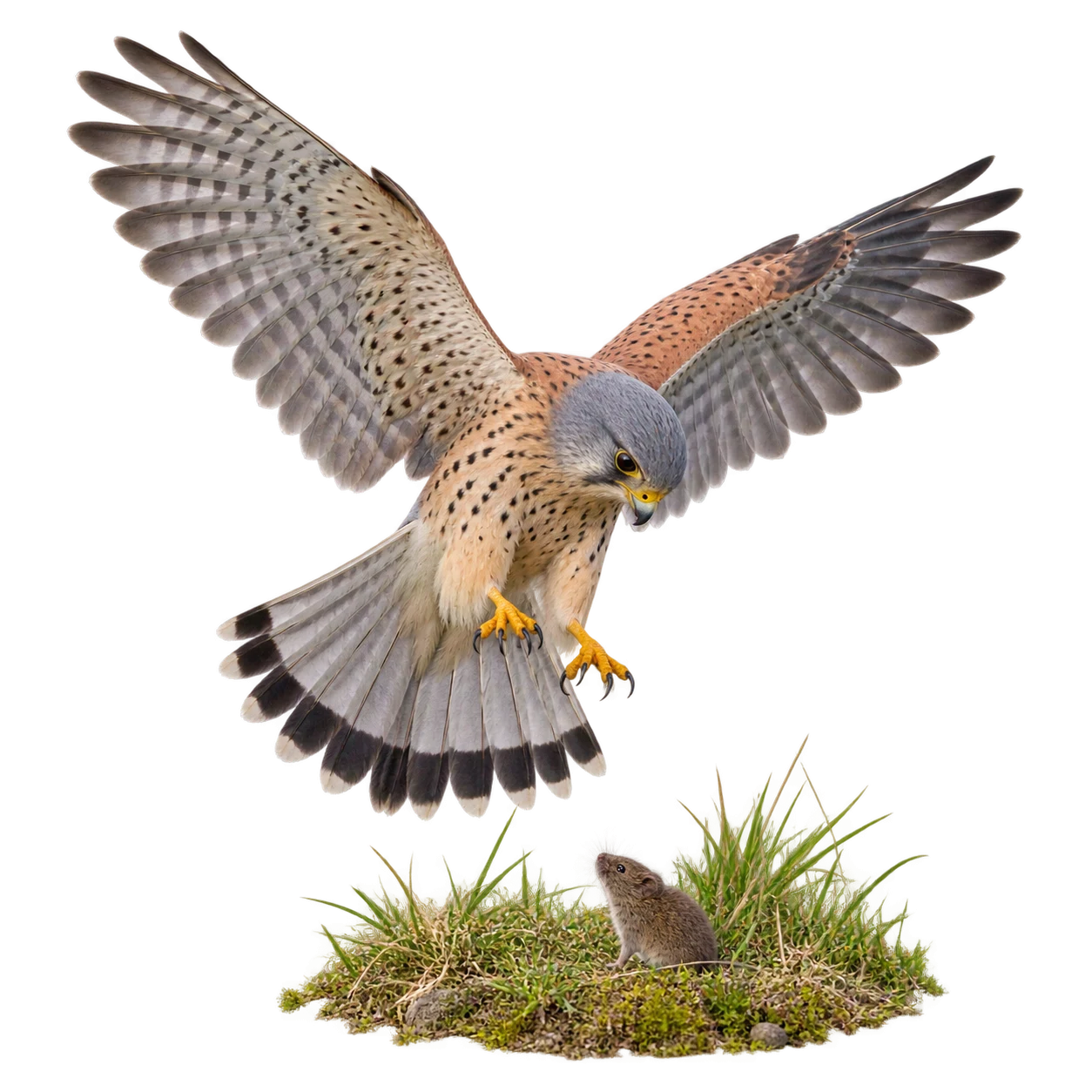
Its hovering is particularly striking: with rapid wingbeats and a fanned tail it holds its position over a hunting area. Many adults stay in Central Europe in winter or move only short distances.
Breeding & rearing
Rock niches, church towers and other niches in buildings serve as nest sites. Special nest boxes are also accepted. Besides a sheltered nest site, an accessible open hunting area is essential for feeding the young.
Diet
Prey examples
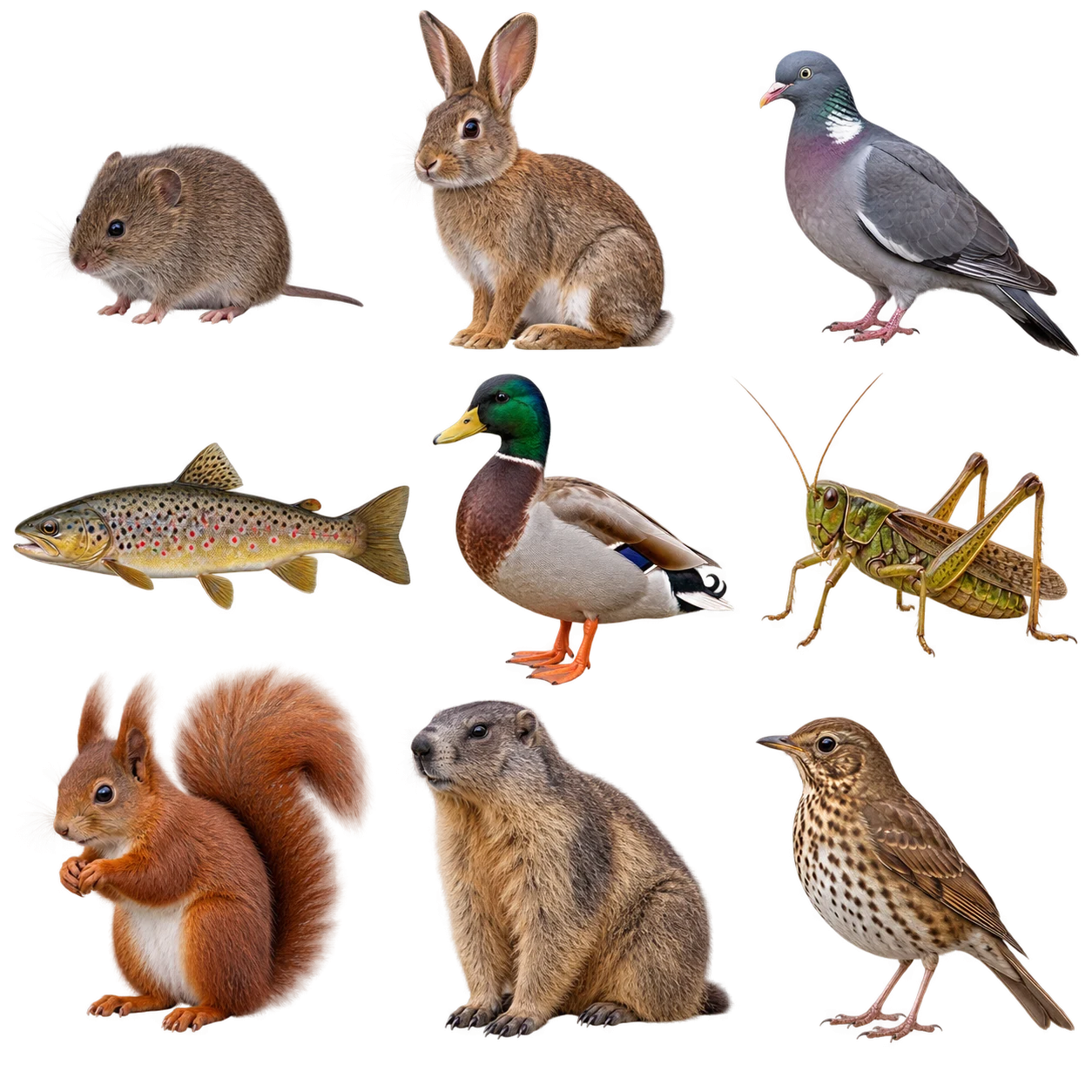
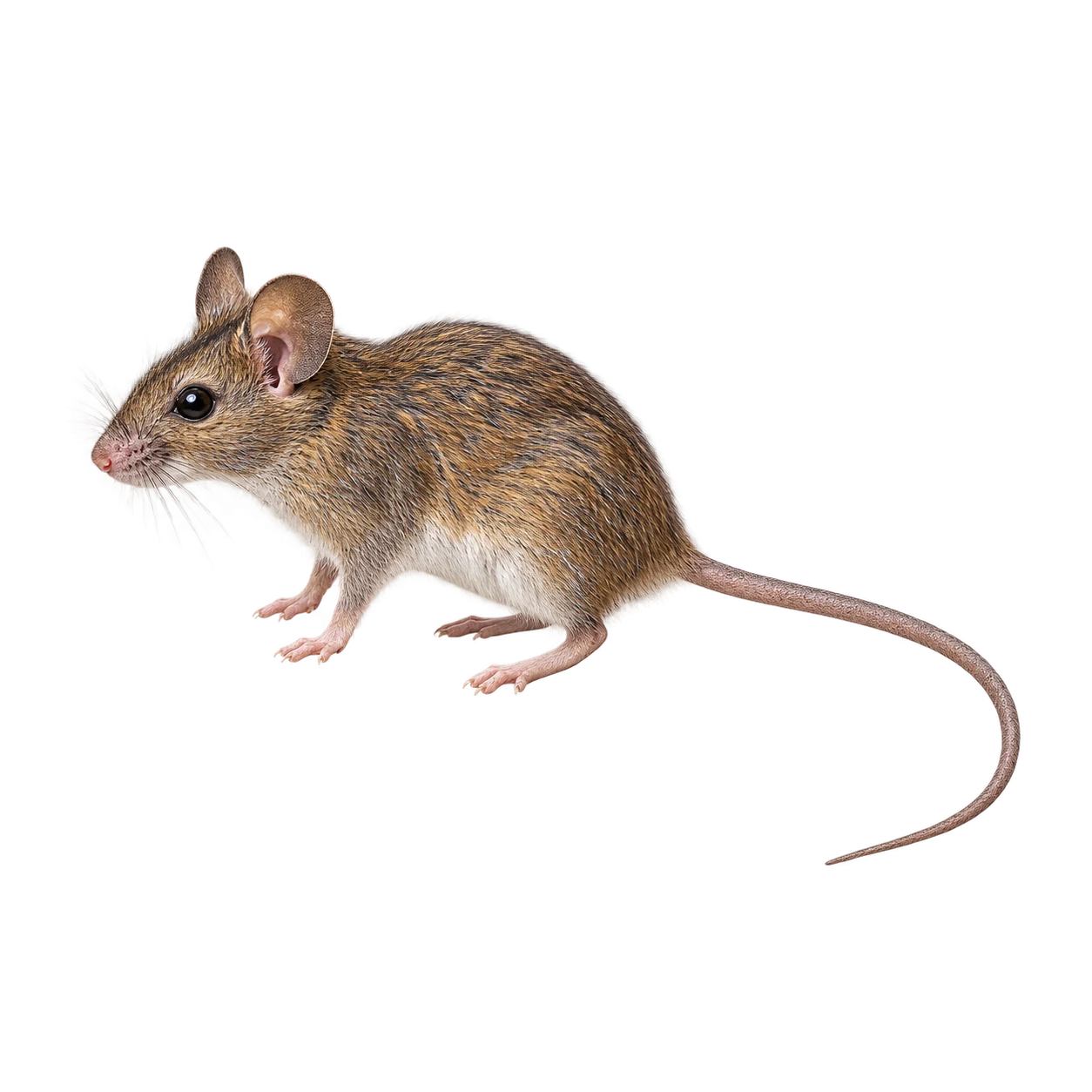
Voles
MiceIn Central Europe the Common Kestrel lives mainly on small rodents such as voles. Large insects, lizards and occasionally small birds or earthworms supplement the diet.
Occasional
Grasshoppers
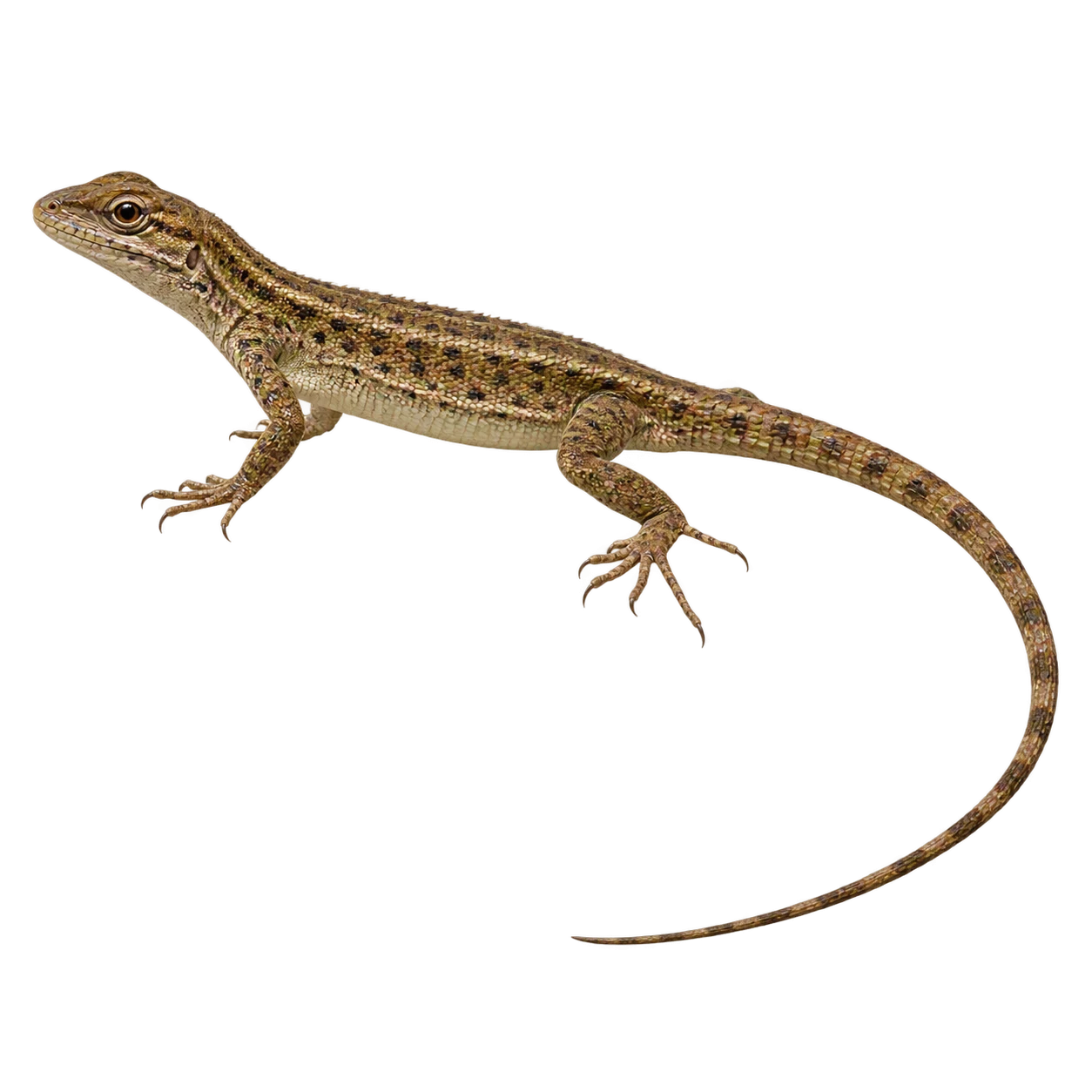
LizardsHunting

With rapid wingbeats and a fanned tail it holds its position above the ground. When it spots a mouse, it drops into a targeted strike.
Distribution
Habitat
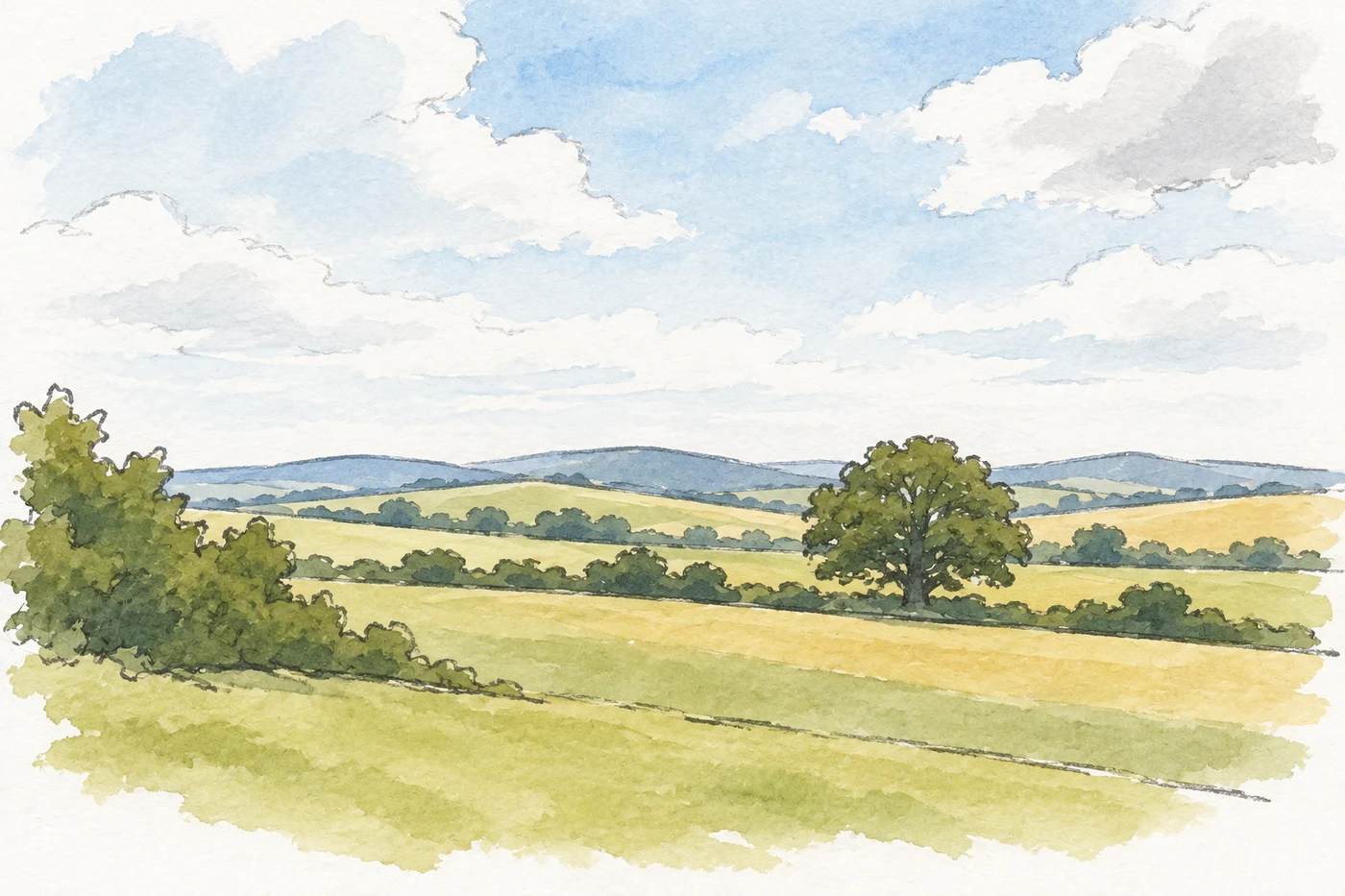
Open fields, meadows and settlements. Breeds in rock niches, on buildings and in nest boxes.