Andean Condor
270–320cm
100–130cm
11,000–15,000g
Profile
- Life expectancy
- Clutch size
- 1 egg
- Global status
- Activity
- Migration
Identification
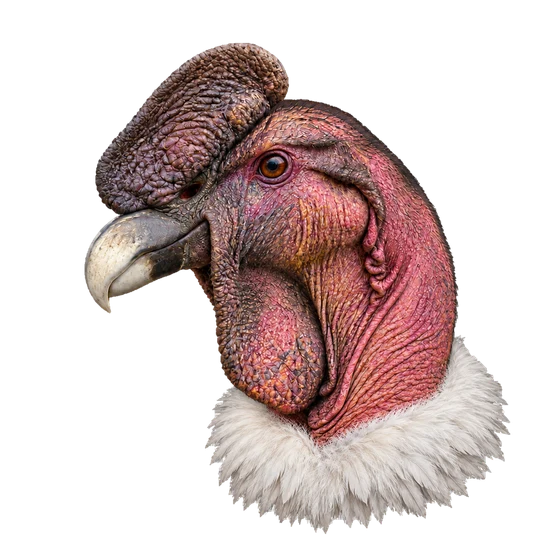
A huge black soarer with flat, plank-like wings, deeply fingered primaries and a white neck ruff. Males have a fleshy comb on the bare head; young birds are plain greyish brown.
Colours
Male
Black plumage with a white downy neck ruff and large white areas on the upperwings. The head and neck are bare and reddish; the male has a fleshy comb on the crown.
Behaviour
Andean Condors take off in the morning from sunlit slopes and use thermals and slope updrafts to soar hundreds of kilometres with minimal effort. Fixed hierarchies apply at carcasses and roosts.
Breeding & rearing
They breed in rock niches at high altitude, without a proper nest. The egg is incubated for just under two months, and the young bird stays with its parents for up to a year, so pairs often breed only every second year.
Diet
Prey examples
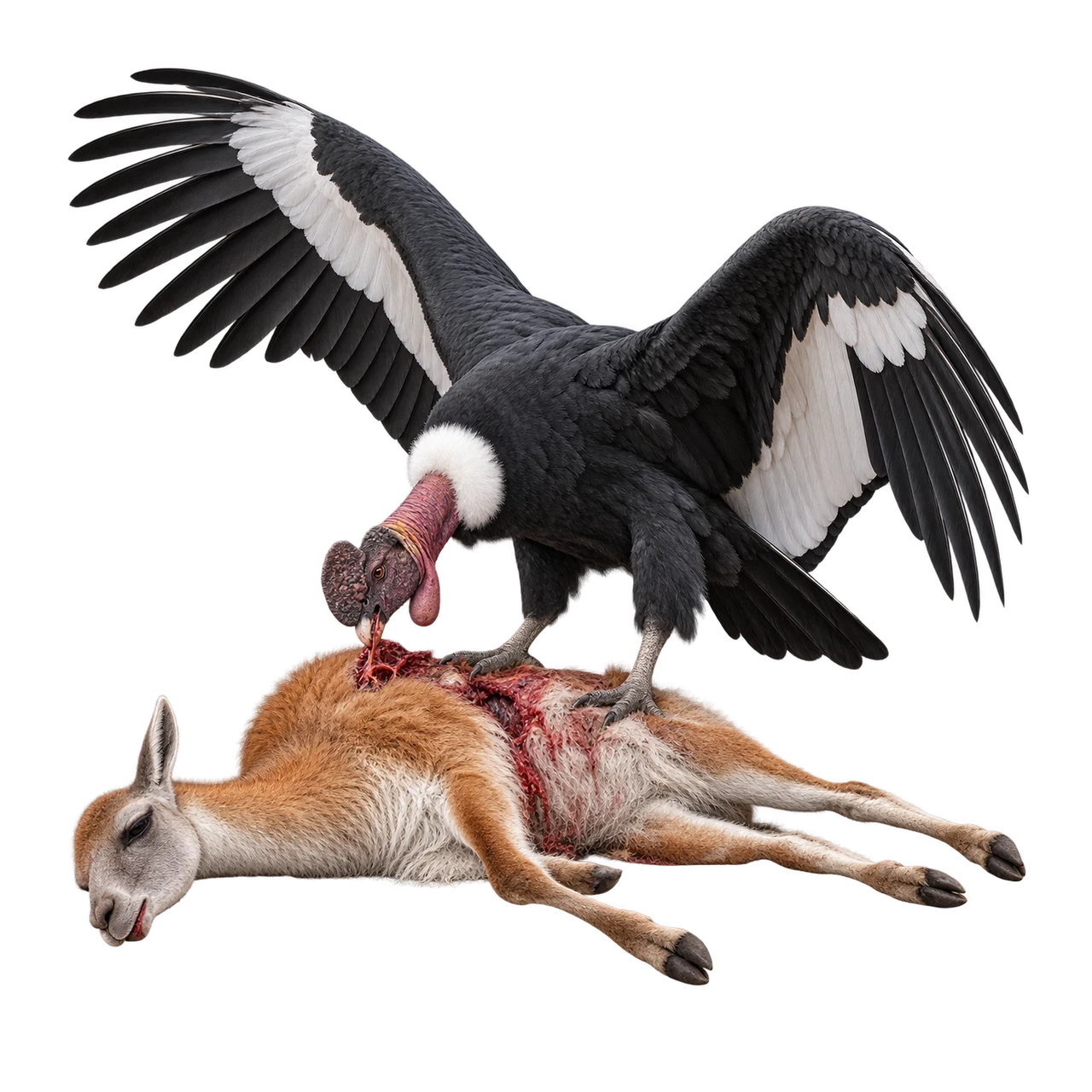
CarrionThe Andean Condor is a pure scavenger. In the Andes it uses carcasses of guanacos, llamas, cattle and sheep, and on the Pacific coast also dead sea lions and whales. It does not kill prey, but occasionally raids seabird colonies.
Occasional
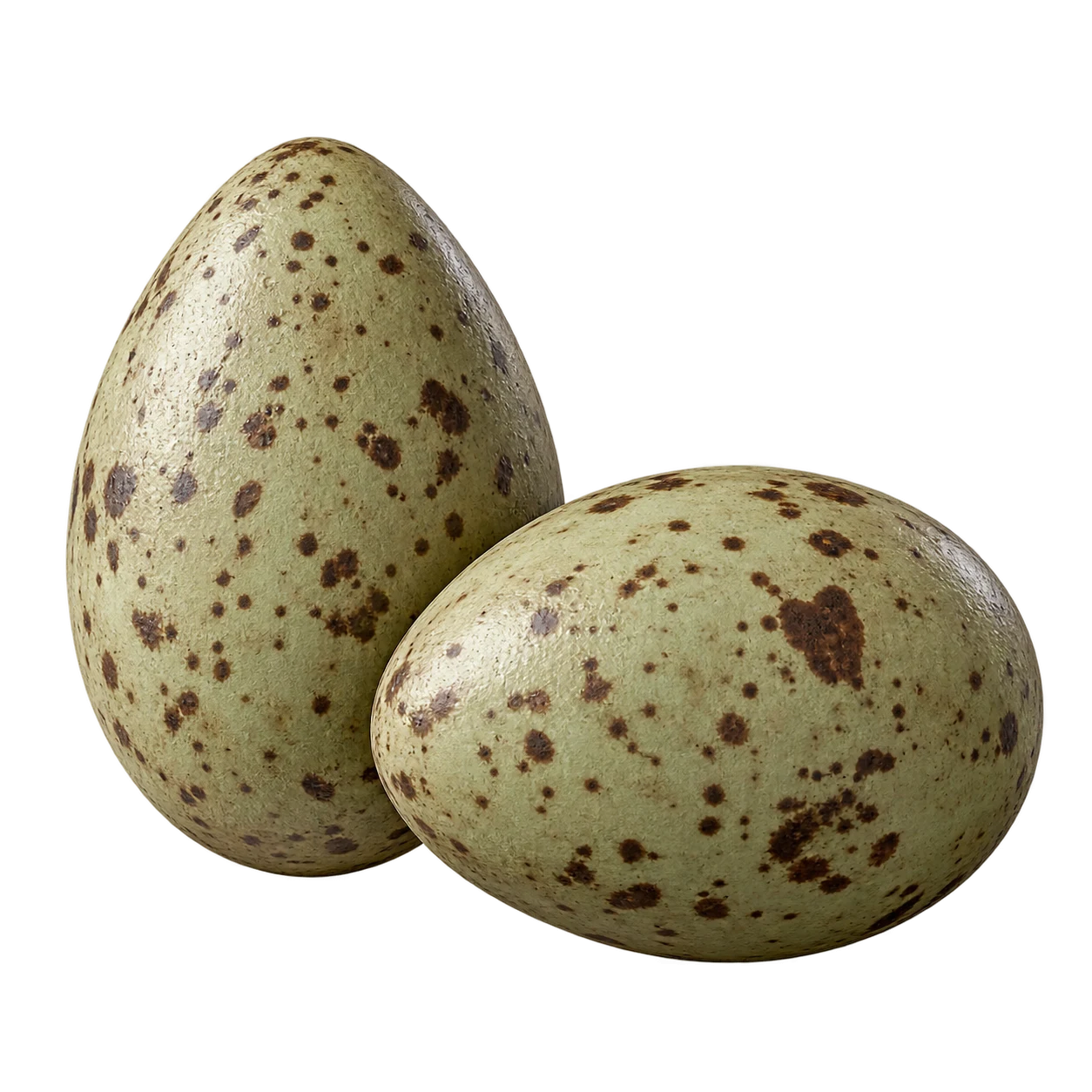
Seabird eggsHunting

The Andean condor uses updraughts along mountain slopes and soars at great height over wide areas. It finds carcasses by sight, also watching other scavengers. At a find, its size lets it displace smaller vultures.
Distribution
Range
Andes & Pacific coast of South America
Habitat
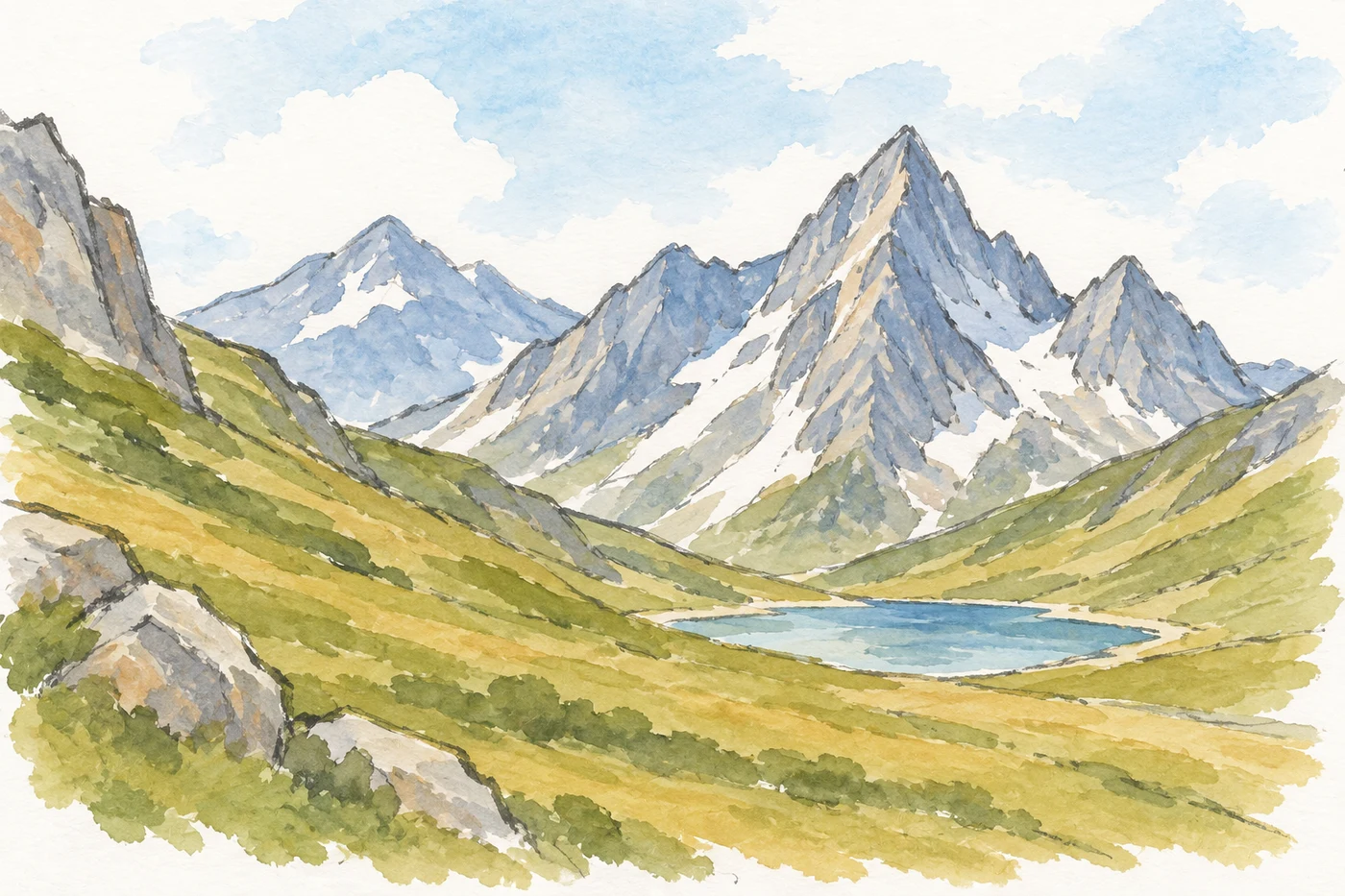
High Andean mountains with cliffs and open grassland, plus coastal deserts and sea cliffs on the Pacific, where it searches for washed-up carcasses.