- Life expectancy
- Global status
Identification
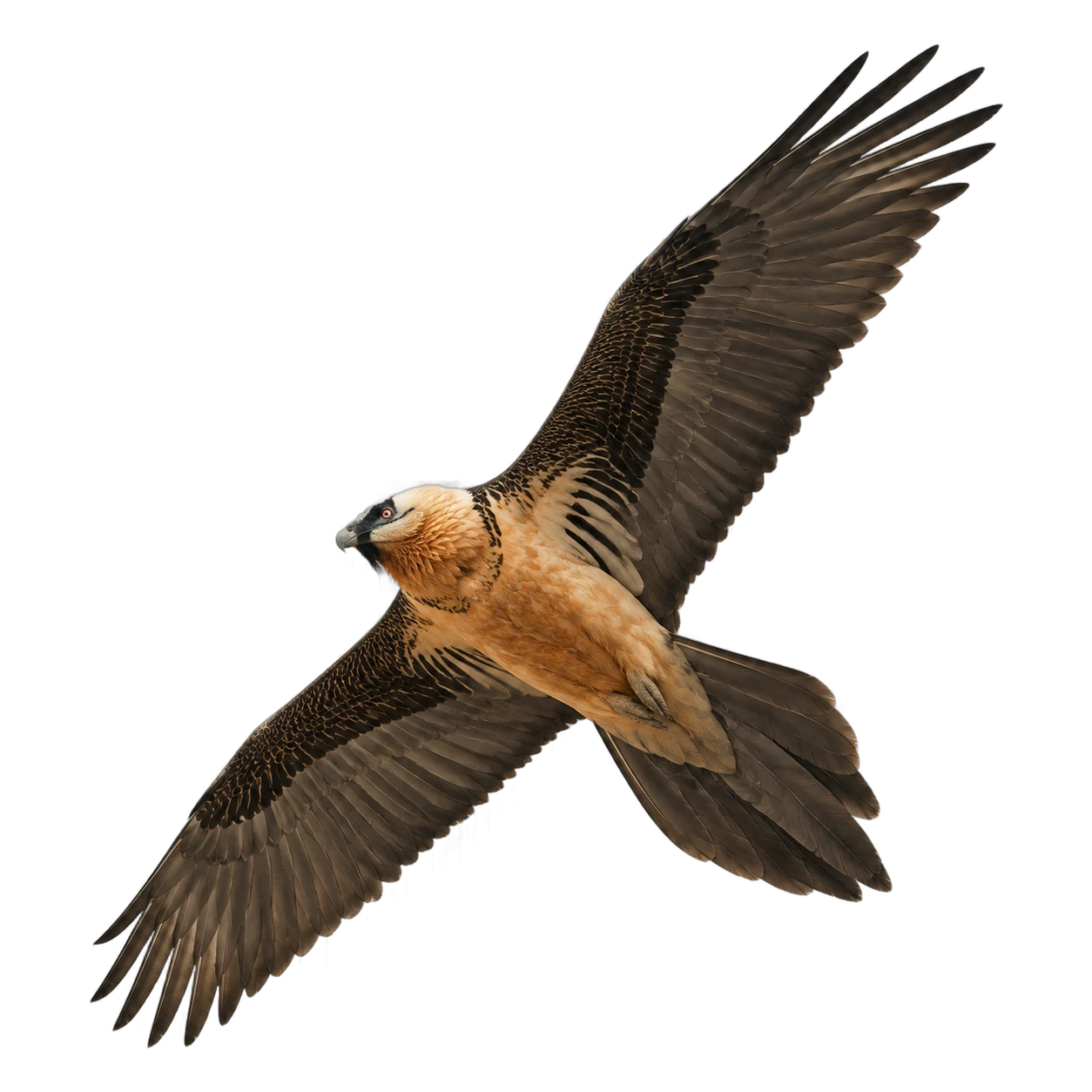
A very large, slender vulture with long, pointed wings and a long wedge-shaped tail by which it can be recognised from afar. The head is feathered; adults show an orange head with a black eye-stripe and beard.
Colours
Adult · Rusty orange
Head, neck and underparts are stained rusty orange by external iron oxide deposits. Wings and tail remain dark, beard and eye mask black.
White and rusty orange are not genetic colour morphs. The pale feathers of adult Bearded Vultures are naturally white and are stained rusty orange by bathing in water containing iron oxide. The intensity can change in the same bird. Juveniles, regardless of this, have a mostly dark juvenile plumage.
Behaviour
Bearded Vultures soar close along cliffs, searching there for bones. After being wiped out, they have been reintroduced in the Alps since 1986; today more than 300 pairs breed there again. Young birds wander widely before establishing a territory.
Breeding & rearing
The nest is in a sheltered rock niche and is lined with wool and hair. Eggs are laid in winter; usually only one young is raised, which fledges after around four months.