- Life expectancy
- Clutch size
- Usually 2 eggs
- Global status
- Migration
Identification
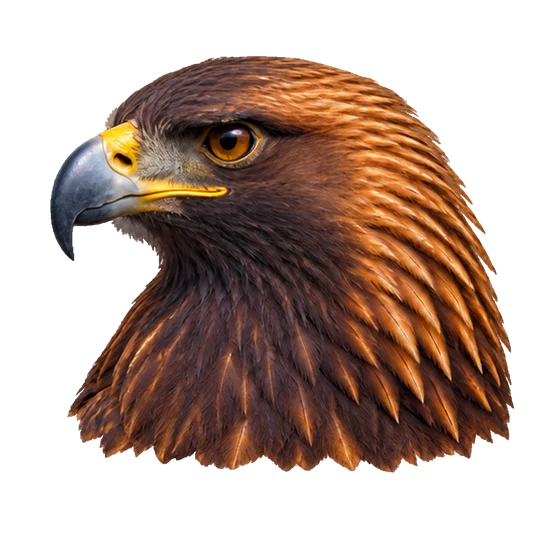
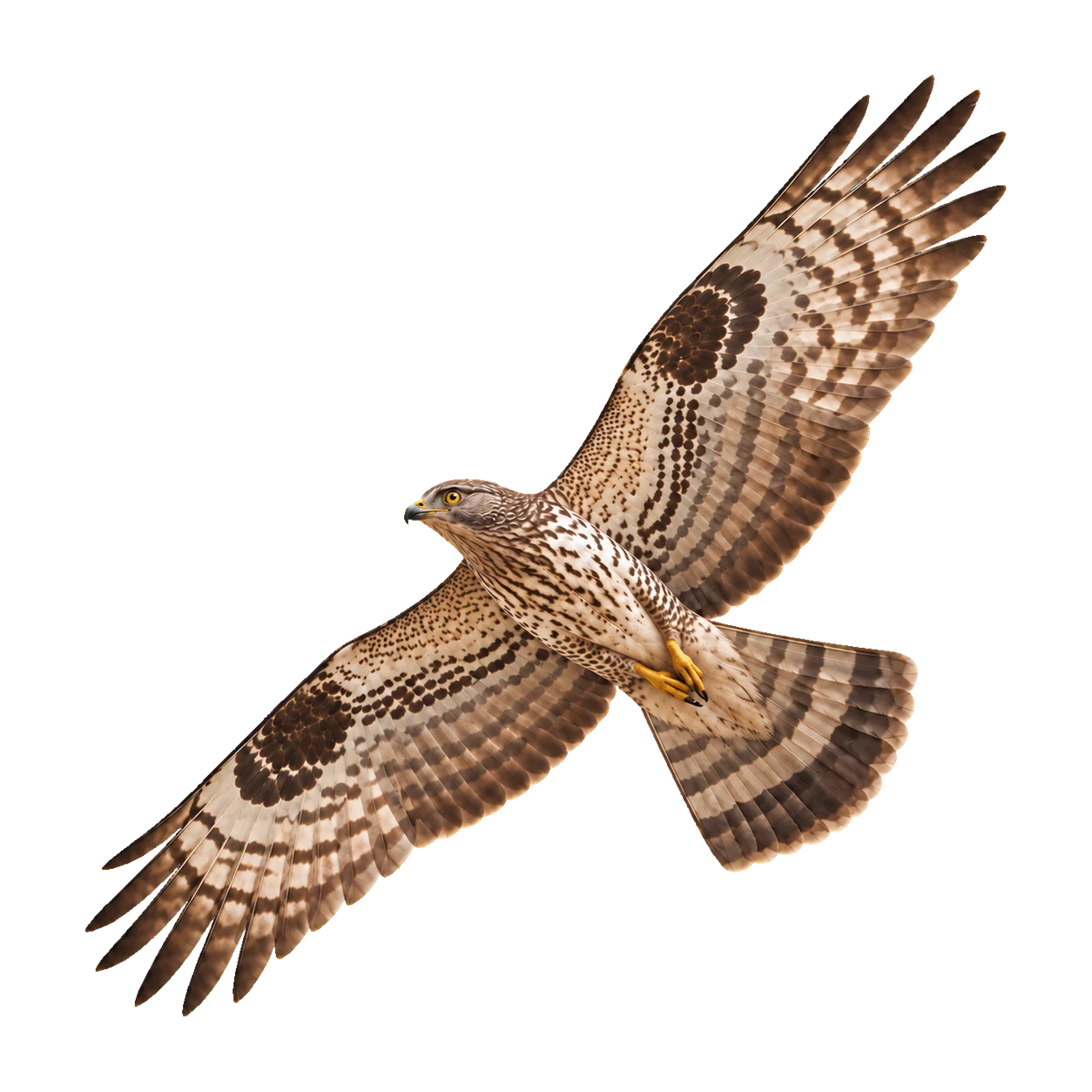
Similar to the Common Buzzard, but with a small head held far forward, a longer tail and wings held flat when soaring. The tail bands, the male’s grey head and the yellow iris help with identification.
Colours
Adult · Intermediate
Cream underparts with distinct brown markings and dark carpal patches. Flight feathers and tail are barred; the iris is yellow.
European Honey Buzzards range from very pale to almost uniformly dark brown. Pale, intermediate and dark are examples from a continuous spectrum, not subspecies. The colour variation also occurs in juveniles; iris colour and feather markings help with ageing.
Behaviour
European Honey Buzzards only arrive in May and leave again in September. On migration they avoid the open sea and gather in thousands at bottlenecks such as Gibraltar and the Bosporus.
Breeding & rearing
The nest is built in tall trees and lined with fresh leafy twigs. The clutch is incubated for a good five weeks; the young are fed with wasp combs and fledge after about 40 days.